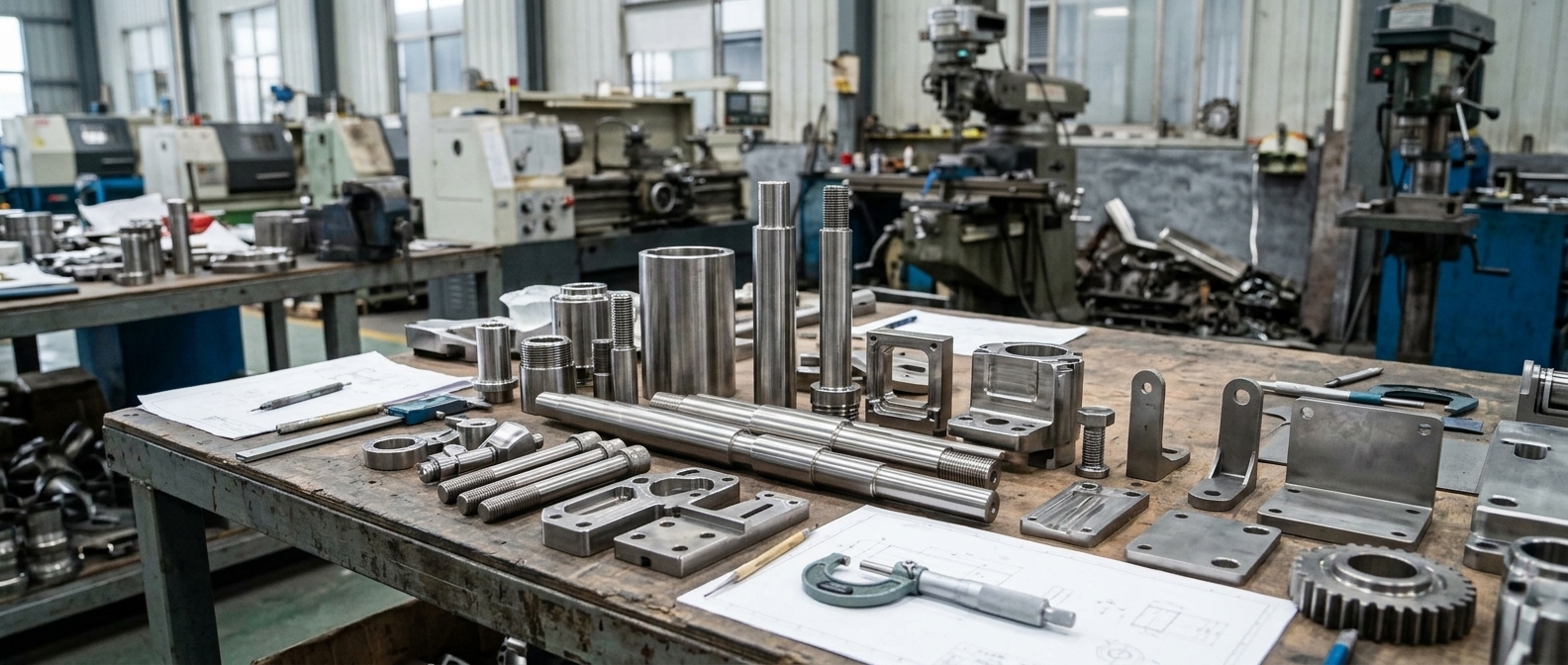
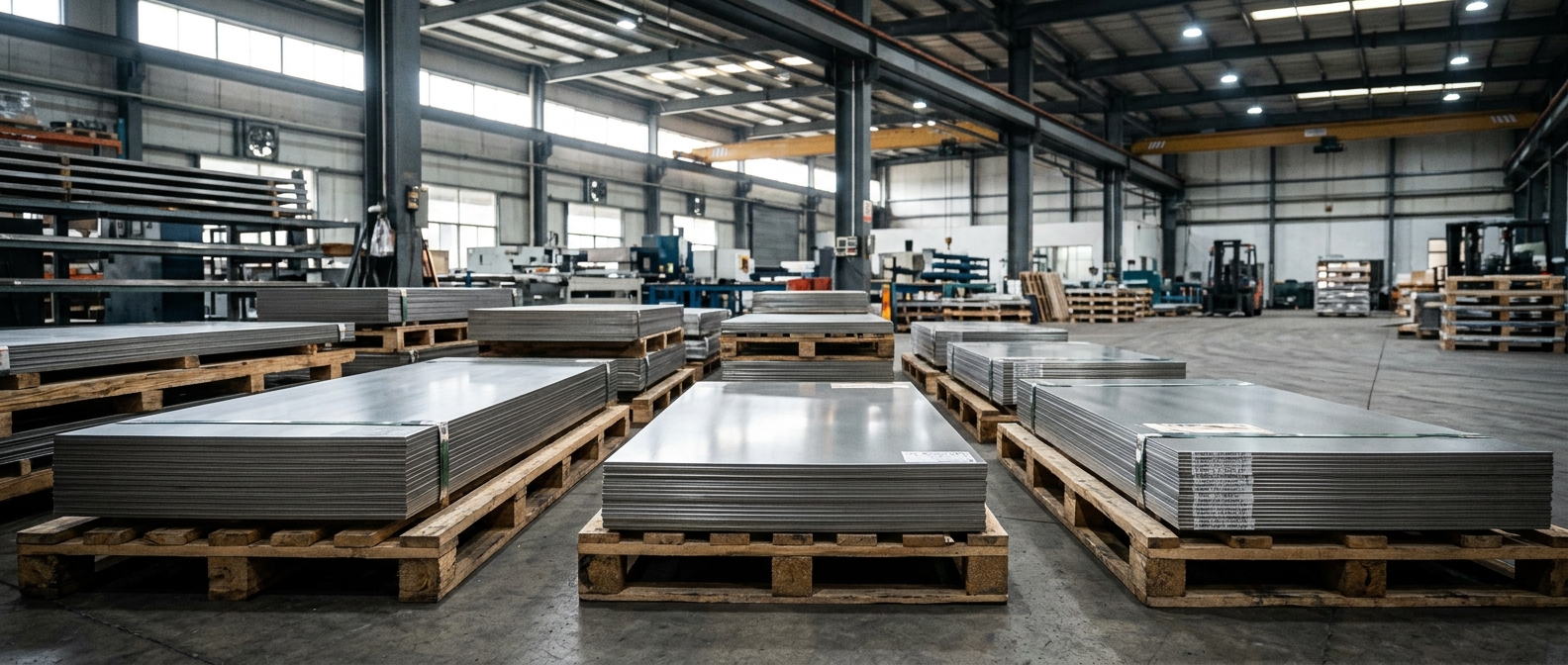
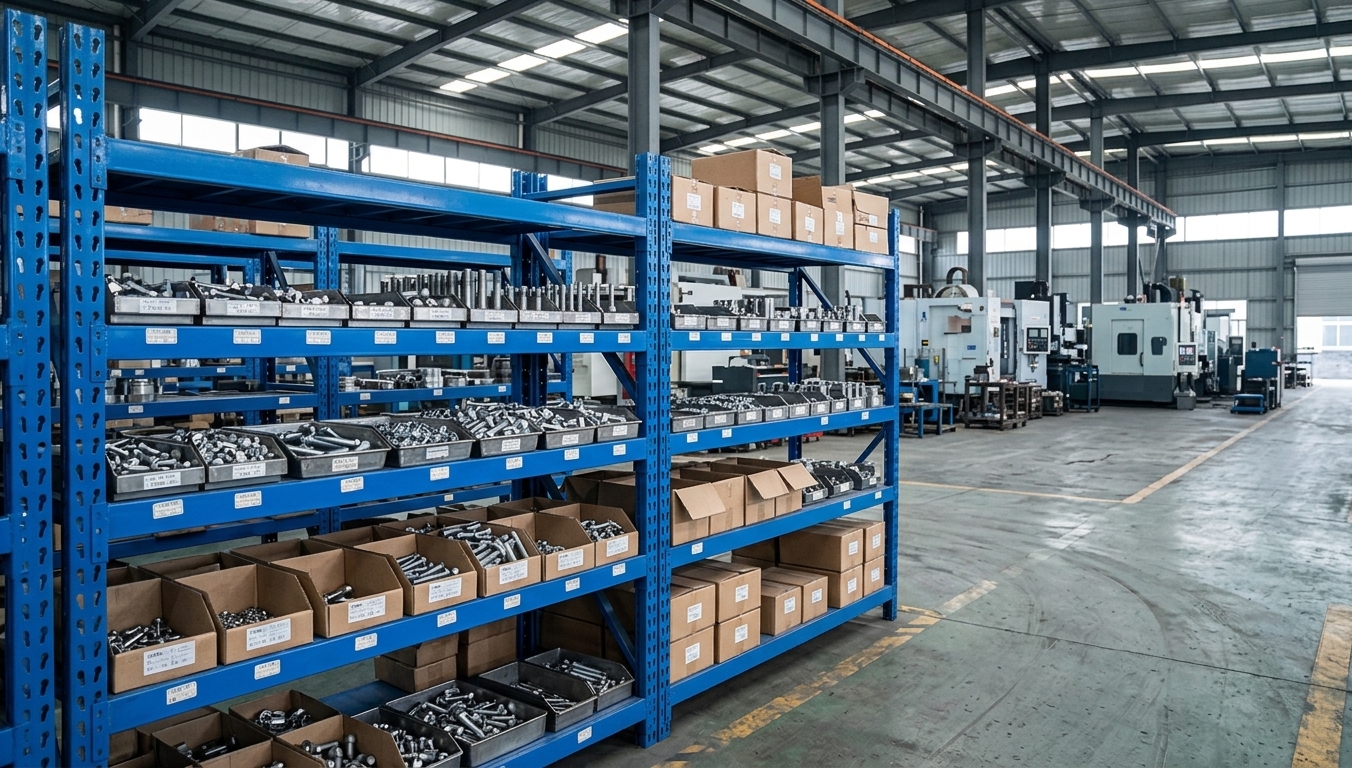
Semi-finished titanium forgings — forged rings, forged discs, forged blocks and custom shapes. Selected semi-finished forms from stock, custom forging supply arranged per drawing and specification.
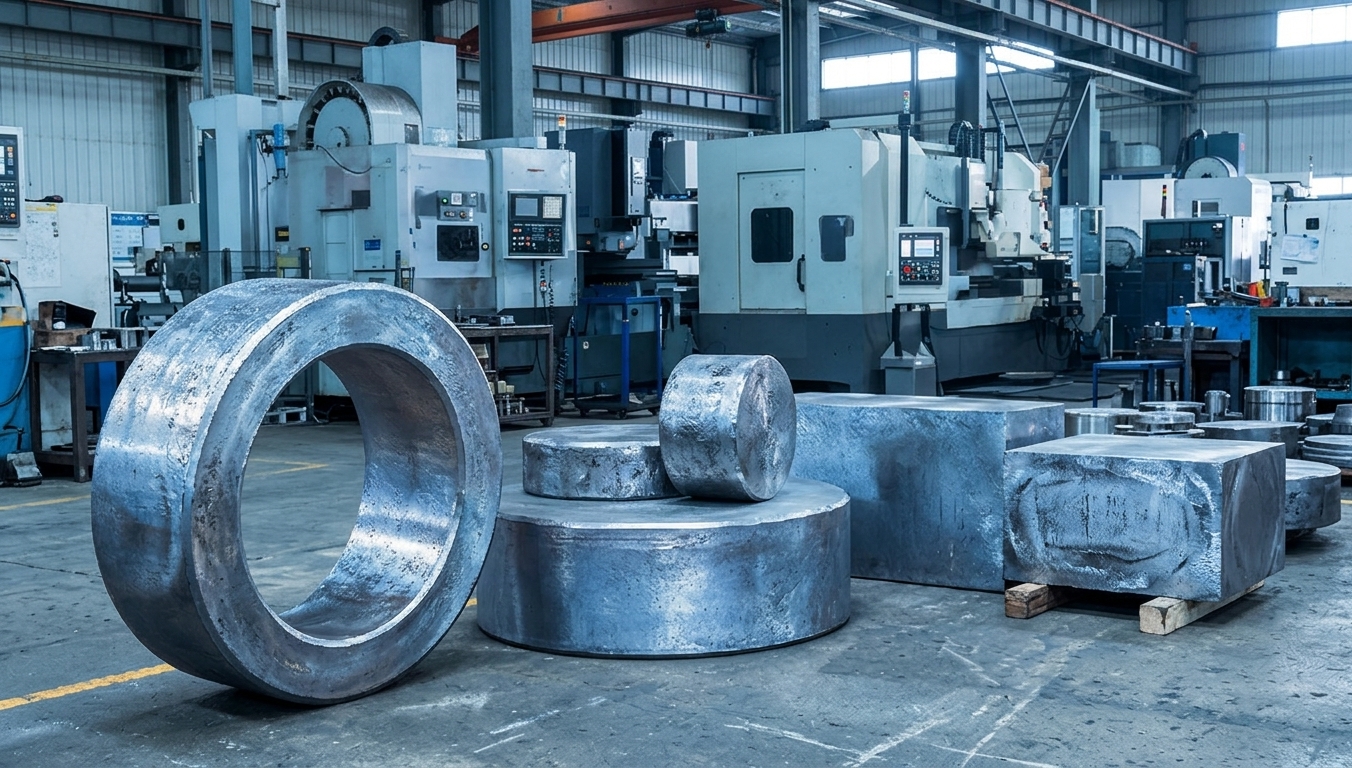
Hollow cylindrical semi-finished forgings — ring-rolled and pierced rings for flanges, housings and bearings.
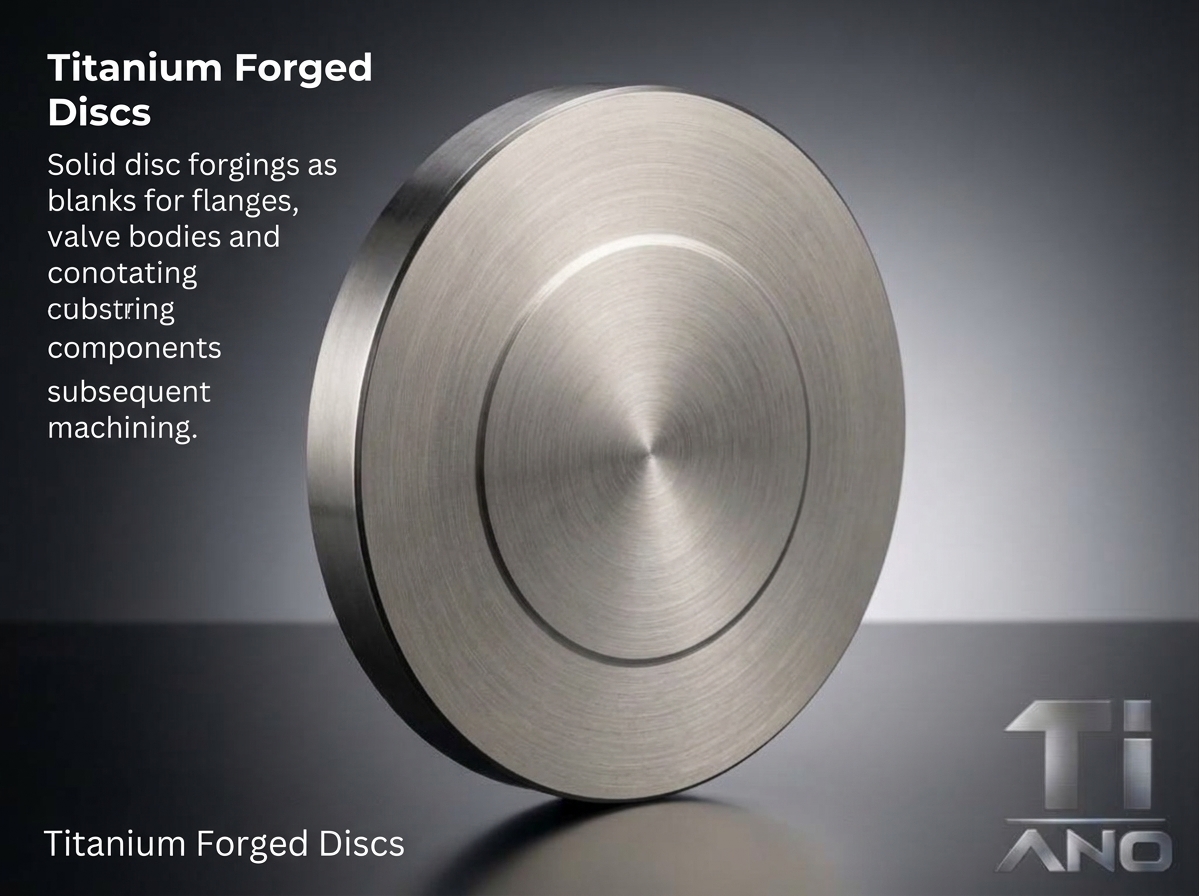
Solid disc forgings as blanks for flanges, valve bodies and rotating components requiring subsequent machining.
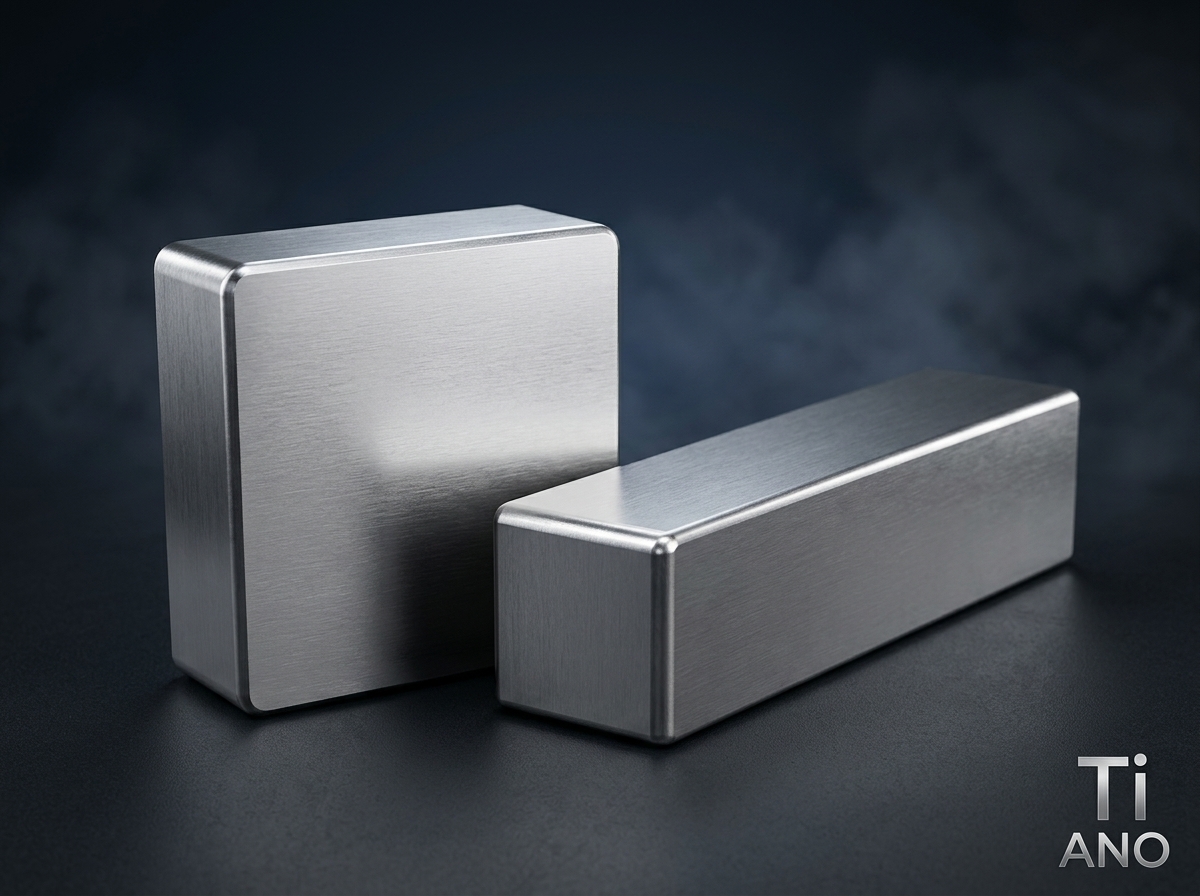
Square and rectangular semi-finished forged billets providing near-net starting stock for multi-axis machining.
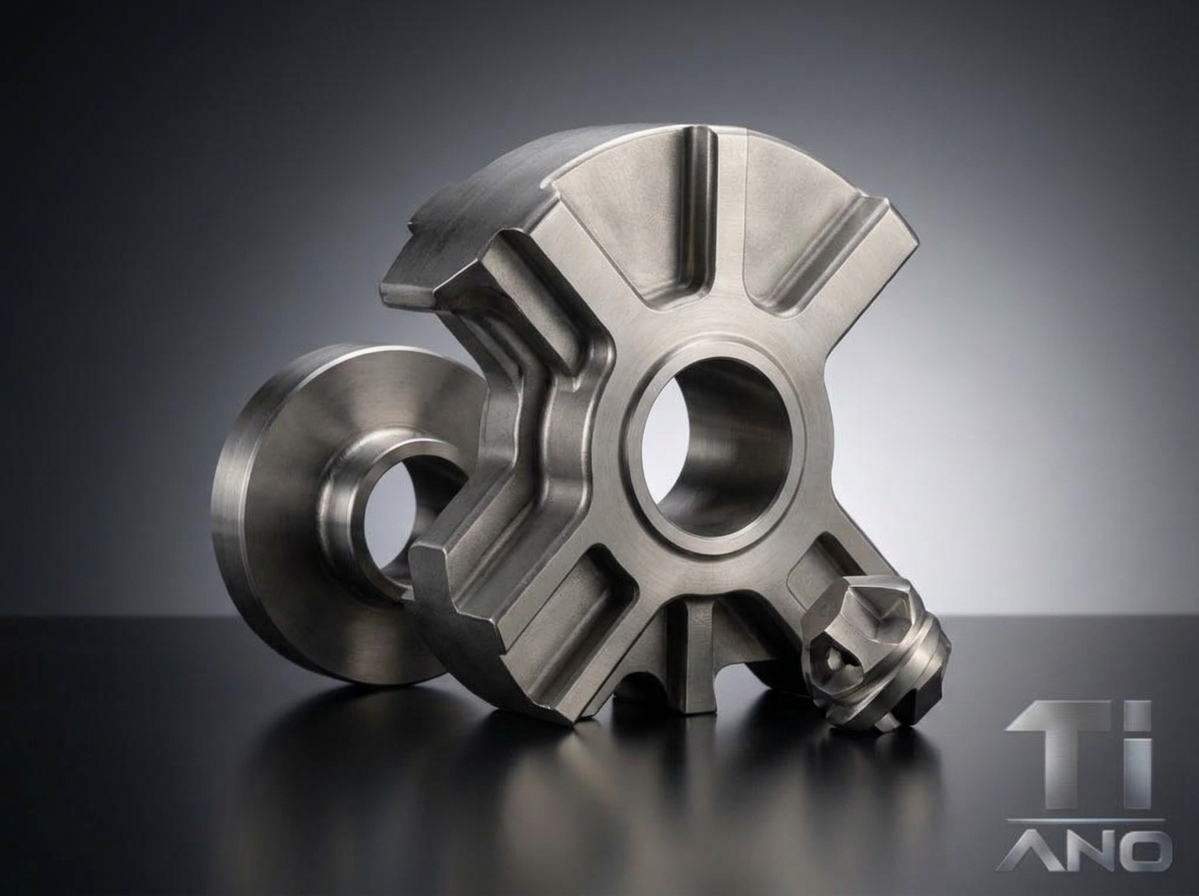
Drawing-based custom forgings and non-standard forged shapes — production coordinated per customer specification.
Titanium forgings are semi-finished titanium forms produced by hot working — open die forging, upsetting, rolling or ring rolling — to achieve shapes closer to the final component geometry. Forgings offer advantages over bar or plate stock when the required shape departs significantly from a simple prism, when the application demands refined and directional grain structure from hot working, or when machining waste from solid billet would be excessive.
Feinuotai supplies semi-finished titanium forgings including forged rings, forged discs and forged blocks, and can arrange custom forging supply according to customer drawings, material requirements and technical specifications. We support material sourcing, technical specification review, production coordination, quality documentation and delivery arrangements.
ASTM B381 / B381M specifies technical requirements for annealed titanium and titanium alloy forgings — covering ring forging, disc forging, block forging and custom-shaped forging forms. Forged product chemical composition follows the same alloy systems as bars and plate, but mechanical property requirements, delivery conditions and dimensional tolerances differ by product form and forging process.
Forging grades are designated with an "F-" prefix under ASTM B381. Chemical composition follows the same alloy systems as B348/B265, but mechanical property requirements and delivery conditions are specific to forged product form.
| Forging Grade | UNS | Material |
|---|---|---|
| Grade F-1 | R50250 | Commercially pure titanium (CP Ti) |
| Grade F-2 | R50400 | Commercially pure titanium |
| Grade F-3 | R50550 | Commercially pure titanium |
| Grade F-4 | R50700 | Commercially pure titanium |
| Grade F-5 | R56400 | Ti-6Al-4V (6% aluminum, 4% vanadium) |
| Grade F-7 | R52400 | CP Ti + 0.12–0.25% palladium |
| Grade F-9 | R56320 | Ti-3Al-2.5V (3% aluminum, 2.5% vanadium) |
| Grade F-11 | R52250 | CP Ti + 0.12–0.25% palladium |
| Grade F-12 | R53400 | Ti-0.3Mo-0.8Ni (0.3% molybdenum, 0.8% nickel) |
| Grade F-23 | R56407 | Ti-6Al-4V ELI (extra low interstitial) |
Specialty Forging Grades: Ti-15333, Ti-6242 and other specialty aerospace or high-temperature alloys — forging applicability, supply feasibility and documentation requirements reviewed per inquiry.
Forging chemical composition follows the same alloying element limits as specified in ASTM B348 / B265 for corresponding grades. Composition limits for forgings do not change because of product form — the same chemical analysis applies to bar, plate and forging when both are made of Grade 5 Ti-6Al-4V. Key impurity limits (Fe, C, O, N, H) are B381-mandated.
| Forging Grade | C max | O max | N max | H max | Fe max | Al | V | Pd | Mo | Ni |
|---|---|---|---|---|---|---|---|---|---|---|
| F-1 | 0.08 | 0.18 | 0.03 | 0.015 | 0.20 | — | — | — | — | — |
| F-2 | 0.08 | 0.25 | 0.03 | 0.015 | 0.30 | — | — | — | — | — |
| F-3 | 0.08 | 0.35 | 0.05 | 0.015 | 0.30 | — | — | — | — | — |
| F-4 | 0.08 | 0.40 | 0.05 | 0.015 | 0.50 | — | — | — | — | — |
| F-5 | 0.08 | 0.20 | 0.05 | 0.015 | 0.40 | 5.5–6.75 | 3.5–4.5 | — | — | — |
| F-7 | 0.08 | 0.25 | 0.03 | 0.015 | 0.30 | — | — | 0.12–0.25 | — | — |
| F-9 | 0.08 | 0.15 | 0.03 | 0.015 | 0.25 | 2.5–3.5 | 2.0–3.0 | — | — | — |
| F-11 | 0.08 | 0.18 | 0.03 | 0.015 | 0.20 | — | — | 0.12–0.25 | — | — |
| F-12 | 0.08 | 0.25 | 0.03 | 0.015 | 0.30 | — | — | — | 0.2–0.4 | 0.6–0.9 |
| F-23 | 0.08 | 0.13 | 0.03 | 0.0125 | 0.25 | 5.5–6.5 | 3.5–4.5 | — | — | — |
Properties apply to annealed forgings tested per ASTM B381 requirements. For solution-treated or solution-treated-and-aged conditions, properties differ. Reduced section values apply to larger forgings — negotiate between manufacturer and purchaser if specified.
| Forging Grade | UTS min (MPa) | 0.2% Yield min (MPa) | Elongation min (%) | Reduction of Area min (%) |
|---|---|---|---|---|
| F-1 | 240 | 138 | 24 | 30 |
| F-2 | 345 | 275 | 20 | 30 |
| F-3 | 450 | 380 | 18 | 30 |
| F-4 | 550 | 483 | 15 | 25 |
| F-5 | 895 | 828 | 10 | 25 |
| F-7 | 345 | 275 | 20 | 30 |
| F-9 | 620 | 483 | 15 | 25 |
| F-11 | 240 | 138 | 24 | 30 |
| F-12 | 483 | 345 | 18 | 25 |
| F-23 | 828 | 759 | 10 | 25 |
Heat Treatment Note: Grade F-5 forgings in solution-treated-and-aged condition can achieve UTS approximately 1100 MPa (160 ksi). Specify delivery condition clearly when inquiring — for example, "annealed Grade F-5 forging" or "solution treated and aged Grade F-5 forging".
Values are typical for annealed material at room temperature. They are provided for design reference and are not test requirements of ASTM B381. Actual values may vary slightly by heat lot and forging process.
| Property | CP Ti (Grades F-1–F-4) | Grade F-5 / F-23 (Ti-6Al-4V) | Grade F-9 (Ti-3Al-2.5V) | Grade F-12 (Ti-0.3Mo-0.8Ni) |
|---|---|---|---|---|
| Modulus of Elasticity (GPa) | ~114 | ~110 | ~113 | ~107 |
| Thermal Conductivity (W/m·K) | ~21 | ~7.2 | ~16 | ~19 |
| Coefficient of Thermal Expansion (20–100 °C, 10⁻⁶/°C) | ~8.6 | ~9.2 | ~9.0 | ~9.4 |
| Melting Range (°C, approx.) | 1660–1680 | 1648–1660 | 1650–1670 | 1660–1680 |
| Forging Grade Group | Density (g/cm³) |
|---|---|
| CP Ti (F-1, F-2, F-3, F-4, F-7, F-11) | ~4.51 |
| F-5 / F-23 (Ti-6Al-4V) | ~4.43 |
| F-9 (Ti-3Al-2.5V) | ~4.48 |
| F-12 (Ti-0.3Mo-0.8Ni) | ~4.53 |
Typical reference values. Not mandatory requirements specified by ASTM B381. Actual density may vary by heat lot within approximately ±0.02 g/cm³.
Two supply routes are available for titanium forgings.
Selected ring, disc and block configurations in commonly requested grades may be available from inventory — subject to current confirmation at inquiry time.
Stock is limited. Not every grade, dimension or forging type is held. Confirm availability before specifying in drawings or purchase orders.
The majority of titanium forgings — including custom geometries, specialty grades and non-standard sizes — are produced through our qualified partner forging facilities.
Material sourcing, technical review, production coordination, inspection and delivery are managed by Feinuotai. Minimum order quantities and lead times depend on forging type, grade and complexity.
Beyond standard semi-finished forging forms, Feinuotai supports custom forging requirements — including drawing-based custom shapes, open-die forgings, custom dimensions and project-based production coordination.
Custom forging geometries reviewed against customer DWG / STEP / PDF drawings — process route, feasibility and forging sequence confirmed per project.
Open-die upsetting, ring rolling, piercing, hydraulic press forging and specialty hot-working processes — coordinated per forging geometry and grade requirements.
Forgings supplied with agreed finish machining allowance — review and confirm machining, heat treatment and inspection requirements at the inquiry stage.
End-to-end coordination from material sourcing through forging production, inspection, packing and export shipment — Feinuotai manages all stages.
Forging dimensions depend on grade, forging form, order quantity and production route. Note: Ranges below include both typical industry reference ranges and Feinuotai-coordinated supply capability.
These ranges reflect standard titanium forging production capabilities across the industry. They are reference values — not Feinuotai's committed maximum or guaranteed available range. Subject to drawing and technical review for actual Feinuotai coordination capability.
| Forging Form | Industry Reference Range | Process Notes |
|---|---|---|
| Forged Rings (ring-rolled) | OD approximately 100 mm – 3000 mm+ · Wall thickness 15 mm – 300 mm · Height 50 mm – 500 mm+ | Produced by ring rolling on pre-formed pierced billets. Ring wall thickness and height depend on starting billet and rolling parameters. |
| Forged Discs (open-die) | Diameter approximately 50 mm – 2000 mm+ · Thickness 30 mm – 500 mm+ | Open-die upset forging from round billet. Disc diameter expansion depends on press capacity and starting billet size. |
| Forged Blocks (open-die) | Length / Width / Height approximately 50 mm – 1500 mm+ (varying ratios) | Square or rectangular forged billets. Side ratios and minimum thickness negotiate with forging facility. |
| Custom Forged Shapes | Drawing-based — process route determined per geometry | Non-standard geometries reviewed against customer DWG/STEP. May combine open-die, upsetting, ring rolling and subsequent machining. |
Actual supply ranges are subject to drawing and technical review. Please share your forging requirements — including grade, dimensions, heat treatment and any special inspection or documentation needs — and we will confirm feasibility with qualified production partners and provide a technical assessment.
Industrial sectors that commonly source semi-finished titanium forgings.
Forged ring and disc blanks for valve bodies, flanges and piping components that must withstand pressure cycling and corrosive service.
Corrosion-resistant forged components for reactors, heat exchanger housings and process machinery handling aggressive media.
Forged rings and disc blanks for airframe and engine-adjacent structures — production coordinated to applicable aerospace forging specifications reviewed per project.
Medical-grade titanium forging blanks, including Ti-6Al-4V ELI forging pre-forms, supplied for further machining and manufacturing by medical-device and implant industry customers.
Forged rings and structural components exposed to seawater and marine atmosphere where titanium's corrosion resistance is valued.
Gear blanks, bearing housings, shaft forgings and brackets for specialty industrial equipment and heavy-duty machinery.
Certain titanium alloy forgings may be subject to China's dual-use export controls depending on material properties, form, specifications, end user and end use. Feinuotai can support the required compliance documentation and export licensing coordination.
Screening reference: China's Export Control List Entry 1C202.b regulates titanium alloys when both conditions are met:
Both conditions must be satisfied. CP titanium grades and Ti-3Al-2.5V (F-9) do not meet the strength threshold under standard conditions. Grade F-5 (Ti-6Al-4V) and other higher-strength alloys may qualify — each product is evaluated on grade, form, dimensions, destination and end use.
Please contact us before placing an order for products that may fall within controlled categories.
Discuss Dual-Use Export RequirementsExport license approval is determined by the competent authority. Feinuotai provides documentation and coordination support but does not guarantee approval. No controlled product may be arranged for export without a valid license.
Forgings are produced to order in Grade F-1 through F-4 (commercially pure titanium), Grade F-5 (Ti-6Al-4V), Grade F-7, F-9, F-12 and Grade F-23 (Ti-6Al-4V ELI). Specific grade, pre-form shape and material availability are confirmed per inquiry — no forging stock is held as inventory for all grades and geometries.
A drawing (DWG, STEP or PDF) is preferred — this should show the forging geometry, target dimensions, required machining allowance, grade, heat treatment condition and any special inspection requirements. If no drawing, describe the forging shape, grade and critical dimensions. Finish allowance and mechanical-testing requirements are confirmed at the quoting stage.
When the required shape departs significantly from a simple prism, or when the application demands the refined, directional grain structure that hot working produces. Forgings can reduce machining waste from solid billet depending on part geometry and production volume. They are especially valuable for ring-shaped, disc-shaped and block-shaped blanks that would otherwise require removing large amounts of material from bar or plate.
The process involves five general stages — actual steps and timeline depend on your specific situation:
Step 1 — Order & Technical Confirmation. You provide: material grade, product form, dimensions, technical specifications, quantity and intended application. We confirm product technical requirements together.
Step 2 — Customer Documentation. You cooperate with end-user information, end-use statement, product technical specifications, contract or order documents and any additional documents required by the competent authority.
Step 3 — Export License Application. Feinuotai coordinates preparation and submission of dual-use export license application documentation, supplementing technical material, end-user and end-use information as required by the competent authority.
Step 4 — Regulatory Review. The competent authority conducts its review. License approval is determined by the competent authority — we do not predict or guarantee the result.
Step 5 — Commercial & Production Process. After any required license is obtained, we proceed with: commercial order confirmation, production coordination, quality and documentation preparation, packing and export shipment arrangements. No controlled product may be arranged for export without a valid license.
Timeline: The overall process may typically take approximately 30–90 days. This is a general reference range covering order confirmation, document preparation, license application and subsequent commercial/production arrangements. It is not an official regulatory approval timeline, not a fixed delivery time and not a guaranteed completion time. If the customer lacks prior dual-use procurement experience, documents need supplementation or the competent authority requires further review, the timeline may extend accordingly.
No. Diameter alone does not determine whether a titanium alloy product is controlled.
Two conditions must both be present under China's Export Control List Entry 1C202.b:
CP titanium (Grades F-1 through F-4, F-7, F-11) and F-9 (UTS ≤ 620 MPa) do not meet the strength threshold under standard conditions. Grade F-5 (Ti-6Al-4V) and higher-strength alloys may meet the strength threshold — form and diameter must also be checked, and the final determination depends on destination, end-user, end-use and other applicable regulations. Please contact us with grade, dimensions and specifications for preliminary screening.
Send your drawing (DWG, STEP or PDF) or describe the forging shape, grade, dimensions and required documentation — we will confirm supply route (stock or custom production), feasibility and pricing.
Helpful details: Forging Form (ring / disc / block / custom) · Material Grade (e.g., ASTM B381 Grade F-5) · Dimensions · Grade & Heat Treatment · Quantity · Delivery Condition (annealed / S&A) · Drawing or sketch · Destination Country
Send InquiryComplementary titanium products frequently sourced alongside forgings.