The most common titanium bar form — used as starting stock for turning, threading, milling and general CNC machining across industrial and process equipment applications.
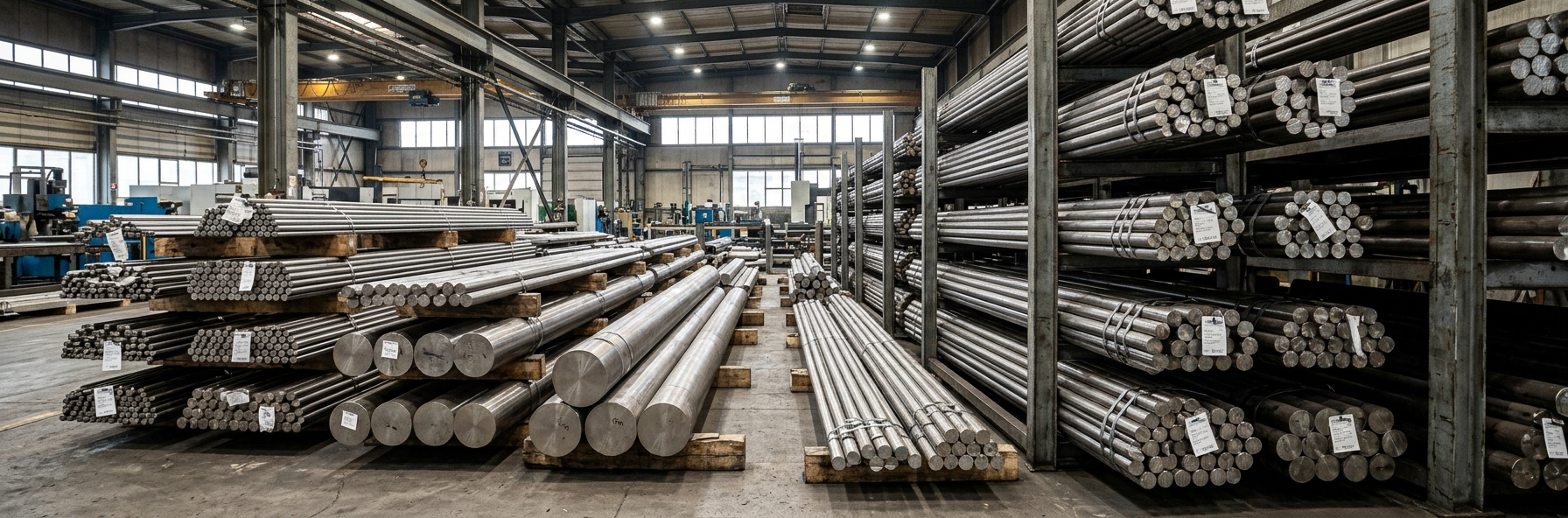
The most common titanium bar form — used as starting stock for turning, threading, milling and general CNC machining across industrial and process equipment applications.
Product Overview — Titanium round bars — also called titanium rods, especially at smaller diameters — are cylindrical bar stock produced primarily by hot rolling or forging titanium billets, with optional cold drawing or centerless grinding where tighter tolerances and smoother surface finish are required. They are the most versatile titanium semi-finished form, serving as the feedstock for thousands of manufactured components: turned shafts, threaded parts and fastener blanks, milled aerospace and industrial hardware, surgical instrument blanks, and general-purpose machined parts.
Round bar supply is reviewed per inquiry against grade, diameter, length, quantity, delivery condition and any required tolerance or specification. A wide range of grades is technically feasible, but not every grade/diameter combination is held in stock — the supply route (regular mill stock vs. mill run vs. forged bar vs. machined from alternative form) is confirmed before a quotation is issued.
Long-form note for procurement: Titanium round bars occupy a central position in the titanium component supply chain because so many end products begin as round bar — fasteners, machined housings, valve components, pump shafts, surgical parts and more. In industrial procurement this means that round bar specifications have to align with downstream machining capacity (bar diameter vs. CNC chucking range), the heat-treatment route if an alloy is specified, and the inspection documentation required by the end-use project. Feinuotai reviews all of these together when an inquiry is received.
Grade feasibility and stock availability are reviewed per inquiry.
Round bar grade selection follows the same logic as plate and sheet — service environment, mechanical property requirements, weldability or forming requirements if downstream processing is planned, and any project code or material specification. Some grades that are standard in plate form may not be the preferred production route for large-diameter round bar and vice versa, so grade and diameter are evaluated together.
Grade 1, 2, 3, 4 (commercially pure titanium), Grade 5 (Ti-6Al-4V), Grade 7, 9, 11, 12, 16, 17 and Grade 23 (Ti-6Al-4V ELI). Grade availability for each specific diameter is confirmed per inquiry.
Grade 1, 2, 4, 5, 7, 9, 12 and Grade 23 (Ti-6Al-4V ELI) form the standard stock range. Stock diameters for each grade vary with current mill inventory — please inquire with the grade and diameter you need.
Grade 3, 11, 16 and 17 are evaluated per inquiry — they are not part of the standard stock programme and supply is subject to mill availability. A grade that is held in stock in plate or sheet form is not necessarily held in round bar form.
ASTM B348 / B348M is the primary product standard for titanium and titanium alloy round bars and billets — including tolerance ranges, chemical composition and mechanical property requirements for supported grades. It is the reference standard used when quoting titanium round bar.
Standard scope note — ASTM B348 governs titanium round bar and billet products. It does not automatically cover titanium square bars, hexagonal bars, flat bars, angle bars or hollow bars — the applicability to those forms is confirmed per product. For rolled flat products (plate, sheet, foil), the relevant standard is ASTM B265.
Additional or alternative specifications may be agreed per order — for example, higher-tolerance demands, specific surface finish requirements, heat-treatment conditions or project engineering codes. Please specify your standard or code requirement in the inquiry.
Three range levels shown — industry reference, custom supply and regular stock. Industry reference is not our stock list.
Round bar diameter, length, delivery condition and tolerances vary by grade and production route. The three layers below distinguish the standard mill capability referenced in ASTM B348, what Feinuotai can supply per agreed order, and the diameters we commonly hold in stock.
Delivery conditions: round bars are normally supplied as-rolled or as-forged in an annealed condition. Cold-drawn and centerless-ground options are available where tighter diameter tolerance and smoother surface finish are required — these are evaluated per order against the diameter and grade.
Round bars cut to customer-specified lengths with tolerances and end preparation (square cut, chamfer) confirmed per inquiry.
Round bar stock for turned components, threaded parts and precision machined features.
Centerless grinding for tighter diameter tolerances and improved surface finish — arranged subject to order requirements and mill capability.
Complete turned and machined components produced from round bar stock against your drawing — see Custom Machined & Fabricated Parts.
Primary feedstock for turning, milling, threading and precision machining across industrial and aerospace components.
Starting stock for titanium bolts, screws, studs and sockets — machined or rolled to final form. See Titanium Fasteners.
Turned components for rotating machinery, pumps, motors and drive systems where corrosion resistance and weight matter.
Round bar blanks for surgical instruments, diagnostic apparatus and precision industrial hardware.
Documentation and inspection packages are confirmed per inquiry. Common items include:
Please specify your documentation and inspection requirements together with grade, diameter, length, quantity and any standard or code requirement.
ASTM B348 / B348M is the primary product standard for titanium and titanium alloy round bars and billets. It specifies tolerance ranges, chemical composition and mechanical properties for supported grades. ASTM B348 does not automatically cover titanium square bars, hexagonal bars, flat bars, angle bars or hollow bars — applicability is confirmed per product.
Feinuotai supports Grade 1, 2, 3, 4, 5, 7, 9, 11, 12, 16, 17 and Grade 23 (Ti-6Al-4V ELI) for round bar. Stock grades are Grade 1, 2, 4, 5, 7, 9, 12 and Grade 23. Grade 3, 11, 16 and 17 are supplied on inquiry only — they are not part of the standard stock programme.
Yes — cold-drawn and centerless-ground options are available where tighter diameter tolerance and smoother surface finish are required. These are evaluated per order against the diameter and grade — please specify your tolerance requirement in the inquiry.
No. Not every grade or diameter combination is held in regular stock. Stock availability depends on grade, diameter and current inventory. For sizes outside regular stock, we confirm whether the bar can be produced by rolling, forging or machining from another form.
Round bar is a solid cylindrical bar produced by rolling or forging. Hollow bar is titanium tubing supplied cut to length with end preparation, used as tubular bar stock. See Titanium Hollow Bars for hollow bar supply details.
Specify grade, diameter, length, quantity, delivery condition and any applicable standard, tolerance or code — we will confirm availability and the appropriate supply route before quoting.
Helpful details: Grade, Diameter, Length, Quantity, Standard (e.g. ASTM B348), Tolerance, Delivery Condition
Send InquiryThe parent category covering all titanium bar profiles — round, square, hexagonal, flat, angle and hollow.
BrowseSquare cross-section bar — useful as-is or as starting stock for hexagonal and custom profiles.
BrowseSix-sided bar stock — primary starting material for titanium hex bolt and fastener production.
Browse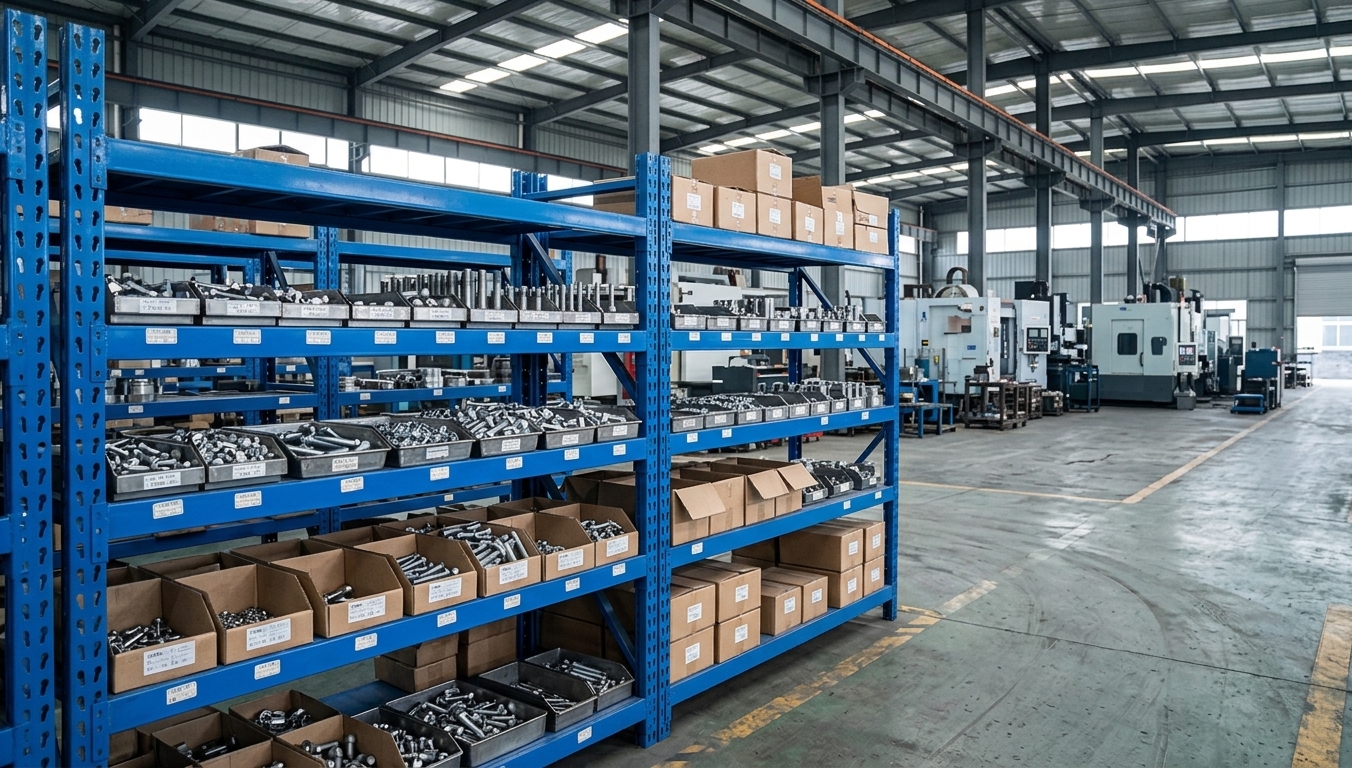
Finished bolts, screws and sockets manufactured from round and hexagonal bar blanks.
Browse