Titanium hollow bars — titanium tubing cut to length and supplied as tubular bar stock for turned parts, threaded components and hollow structural sections.
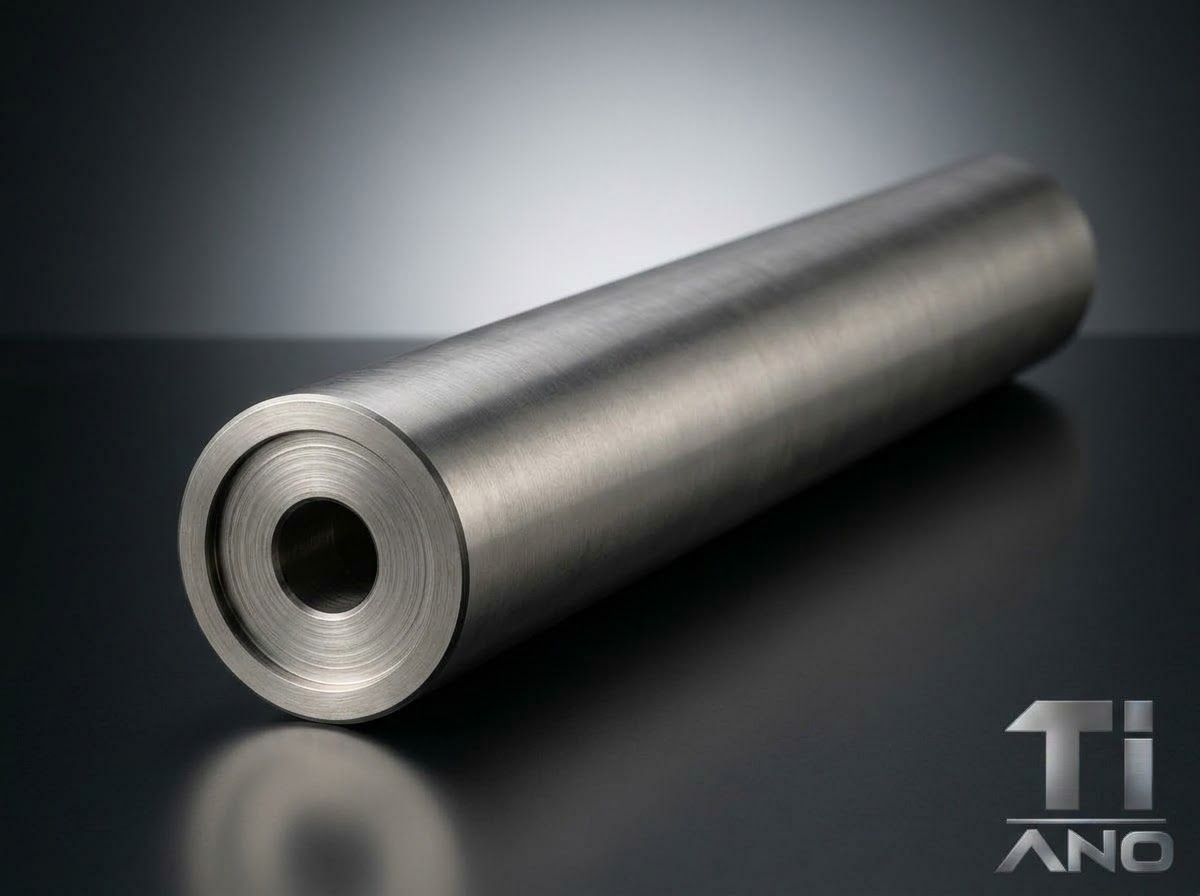
Titanium hollow bars — titanium tubing cut to length and supplied as tubular bar stock for turned parts, threaded components and hollow structural sections.
Product Overview — Titanium hollow bars are titanium tubing cut to length and supplied as tubular bar stock. They are not a separately rolled bar form — they begin as titanium tube (seamless or welded) and are cut to specified length with end preparation as required. Hollow bars serve as the starting material for turned parts with a central bore, threaded components, and hollow structural sections where the final part does not need a full solid round bar.
Hollow Bar vs Solid Round Bar — the difference: Solid round bar stock is produced by rolling or forging a billet into a solid cylindrical profile. Hollow bar is cut from titanium tube — the tube wall thickness and OD / ID combination determines the hollow bar's outer dimension and wall thickness. For a component that needs a central hole, hollow bar can save significant machining time and material cost compared with starting from a solid round bar and drilling out the centre.
Long-form note for procurement: When a buyer specifies "hollow bar" without realising it is actually cut tubing, the inquiry can go to the wrong product pathway. Feinuotai's supply route for hollow bars begins at the titanium tube level — we confirm whether seamless tube or welded tube is the appropriate starting form, the applicable tube standard, and the most economical length cut for your part programme. Specifying OD × ID × wall thickness × length × grade in your inquiry helps us route it correctly.
Grade 1, 2, 3, 4 (CP titanium), Grade 5 (Ti-6Al-4V), Grade 7, 9, 11, 12, 16, 17 and Grade 23 (Ti-6Al-4V ELI). Feasibility per OD / wall thickness / ID combination and grade evaluated per inquiry.
Hollow bars start as titanium tube — see Titanium Tubes & Pipes. Tube supply is the upstream step: we source or mill tube and then cut it to your required bar lengths.
ASTM B348 / B348M does NOT cover titanium hollow bars.
ASTM B348's scope is solid titanium round bars and billets — it is a product standard for solid bar forms only. Hollow bars are cut from titanium tube stock, so the applicable standard is the tube product standard for the starting tube form, not the round bar standard. For example, seamless titanium tube typically falls under an ASTM tube specification; welded titanium tube under a welded tube specification. Feinuotai confirms the applicable tube standard together with the tube supply before cutting to hollow bar length.
Any additional code or specification requirements for the finished hollow bar (tolerance, straightness, end preparation) are agreed per order in addition to the starting tube specification. Please state your tolerance, end preparation and any code requirements together with OD × ID × wall thickness × length × grade in your inquiry.
Seamless vs Welded tube route — which applies? Seamless titanium tube is produced by piercing or extruding a solid titanium billet — applicable to smaller OD / thicker wall hollow bars. Welded titanium tube is produced by forming and welding titanium strip — applicable to larger OD / thinner wall hollow bars. Feinuotai confirms the most economical starting form for your OD / wall thickness requirement at inquiry time.
Starting stock for turned parts that need a central bore — saves machining time vs solid round bar.
Hollow cylindrical sections for frames, supports and assemblies where weight reduction matters.
Hollow bar starting stock for internally or externally threaded components with a central bore.
ASTM B348 does NOT apply to titanium hollow bars. B348 is the standard for solid titanium round bars and billets only. Hollow bars are cut from titanium tube stock, so the applicable standard is the starting tube specification (seamless or welded tube), not the round bar standard. Any additional hollow bar-specific requirements (tolerance, straightness, end preparation) are agreed per order.
Choose hollow bar if your component needs a central bore — hollow bar starts from tube stock, which means the OD and wall thickness define the component geometry directly, saving significant machining time and material cost compared with starting from solid round bar and drilling out the centre. Choose solid round bar if your component does not need a central bore.
Hollow bars are produced by cutting titanium tube stock to length. Regular hollow bar availability therefore follows titanium tube stock availability — both seamless and welded tube stock are confirmed at inquiry time.
Specify OD × ID × wall thickness × length × grade — or OD × wall thickness × length × grade if you do not need to state ID separately. If you have a drawing of the part, you can send it directly and we will confirm whether hollow bar is the right starting form or whether we should recommend solid round bar or another route.
Tell us OD × ID × wall thickness × length × grade — or send a drawing — and we will confirm the appropriate tube starting form and provide a tailored quotation.
Helpful details: OD, ID, Wall Thickness, Length, Grade, Drawing
Send Inquiry
Parent category covering all titanium bar profiles — solid round bar is the direct comparison.
Browse
The upstream product — hollow bars are cut from titanium tube stock.
BrowseSolid round bar alternative — use if your component does not need a central bore.
Browse