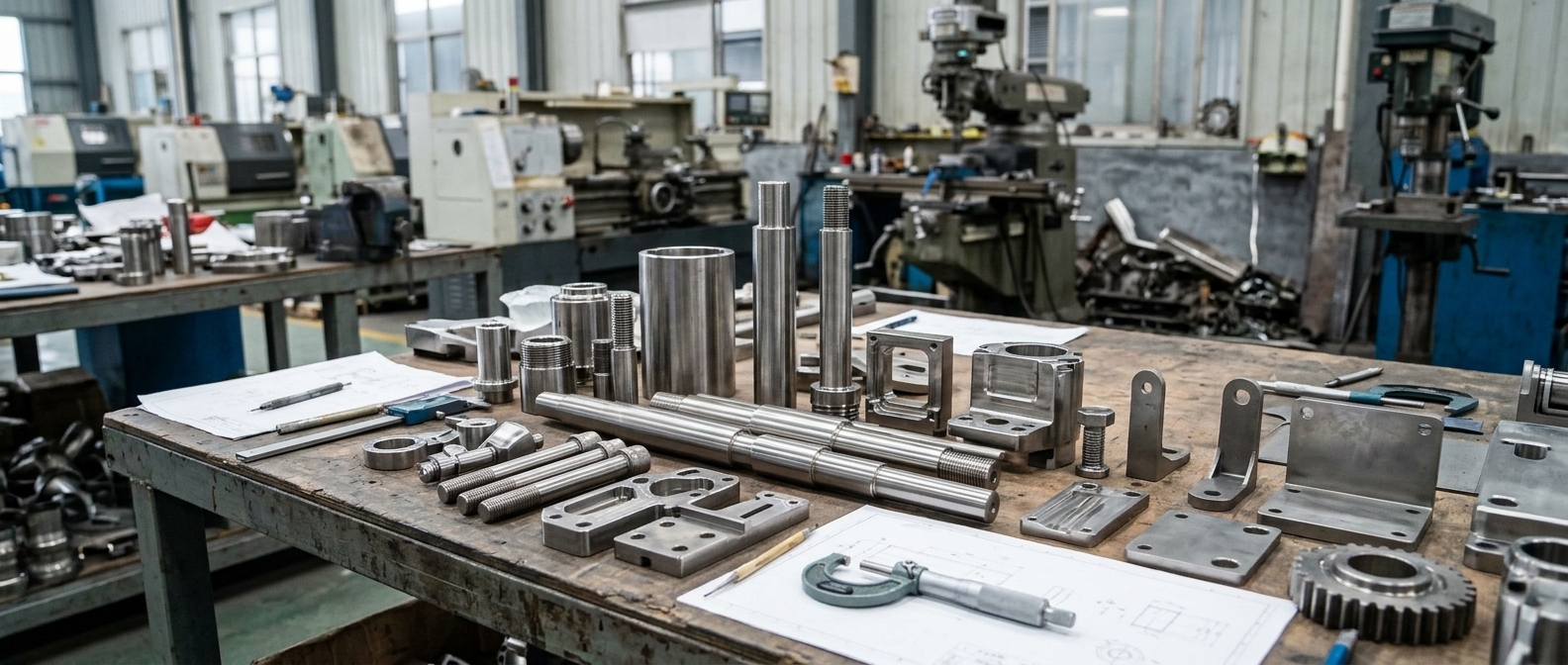
Precision CNC-milled titanium components — milling, turning, drilling and multi-axis machining — produced from plate, bar or forged stock to your drawing or specification.
Milled titanium parts are precision CNC-machined components produced by removing material from titanium plate stock, bar stock or forged blanks to create the finished part geometry. Milling operations include face milling, pocket milling, contour milling, drilling and boring — suited to producing complex 3D shapes, tight-tolerance features and components with multiple machined surfaces.
Feinuotai sources titanium starting stock (plate, bar or forged blanks) and coordinates CNC machining through qualified partner workshops. We manage the full supply chain from material procurement through delivery, including drawing review, machining process selection, tolerances, post-processing and documentation.
3-axis and multi-axis CNC milling for pockets, slots, contours and complex 3D features. Titanium-specific tooling and coolant strategies matched to titanium's lower thermal conductivity.
Single-axis and multi-axis turning for rotational components — shafts, bushings, rings and cylindrical features. Includes facing, boring, threading and grooving operations.
Precision hole making including gun drilling for deep holes, reaming for tight tolerances and boring for large-diameter holes.
Achievable tolerances depend on part geometry, size and grade. Typical CNC milling tolerances are approximately ±0.01 mm, with tighter tolerances available through finish grinding or honing.
Drawing-based manufacturing — Feinuotai sources titanium starting stock and coordinates machining through qualified partners.
Feinuotai's role in the milling supply chain focuses on three core areas: titanium starting stock sourcing (an established Feinuotai capability), drawing and specification review, and end-to-end supply management. CNC machining itself is coordinated through qualified partner workshops specializing in titanium processing. Feinuotai manages quality on your behalf throughout the machining process.
Titanium starting stock sourcing — plate, bar, forged blanks in multiple grades — drawing review, quotation, project management and documentation coordination.
CNC machining, turning, drilling, multi-axis operations and post-processing — performed by qualified partner workshops specializing in titanium.
Grade selection depends on part function, loading, environment and machining requirements.
Milled titanium parts can be produced from multiple titanium grades, depending on the part's mechanical, corrosion and machining requirements. Commercial pure grades (Grade 1, Grade 2) are preferred for good machinability and corrosion resistance in chemical environments. Grade 5 (Ti-6Al-4V) offers higher strength but requires lower feed rates and better tooling. Grade 7 offers corrosion resistance similar to Grade 2 with slightly higher strength. Grade 9 (Ti-3Al-2.5V) is a medium-strength alloy with good weldability and machinability.
Grade availability depends on the selected starting stock form (plate, bar or forged blank) and supply route. Please specify your required grade when submitting an inquiry.
Confirmed against customer drawing — typical achievable tolerances are reference values.
Manual or vibratory deburring to remove sharp edges and burrs after machining.
Surface finish improvement — mechanical polishing, bead blasting or electropolishing coordinated per requirement.
Annealing, stress relief or solution treatment coordinated per grade and part function.
Titanium welding and assembly of multiple machined components coordinated through partner workshops.
Brackets, ribs, structural components and tooling for aircraft equipment and general aviation applications.
Precision-machined surgical instruments, dental components and medical device parts.
Valve bodies, pump housings, heat exchanger components and fluid handling parts for corrosive environments.
Jigs, fixtures, special-purpose tooling and production equipment components.
Dimensional inspection reports, surface roughness measurements and material test certificates are available. Inspection scope depends on part complexity, tolerances and customer requirements — some applications may require third-party verification or additional testing such as penetrant inspection or ultrasonic inspection.
Typically ±0.01 mm for standard CNC milling operations on titanium. Tighter tolerances (to ±0.005 mm) are possible with additional finish grinding or honing operations. Actual achievable tolerance depends on part geometry, size and grade.
Milled parts can be produced from titanium plate stock, round bar stock, square bar stock or forged blanks. The selection depends on part geometry — forged blanks are chosen for better material yield on near-net parts, while bar or plate stock may be more efficient for simpler geometries.
Yes — Feinuotai accepts customer-supplied titanium bar, plate, forging or tube stock for machining. Stock-inspection procedures apply per your or our quality policy to verify material identity and condition before machining begins.
Deburring, polishing, bead blasting, passivation, anodizing and heat treatment can be coordinated per requirement. Feinuotai manages post-processing through qualified partners and ensures final part conformance.
Send your drawing (STEP, IGES, DWG, DXF, PDF) or describe material, dimensions, tolerances and quantity. For drawing-based requirements, include your drawing file with grade, tolerance, surface finish and quantity specifications.
Helpful details: Drawing File, Grade, Tolerances, Surface Finish, Quantity, Starting Stock Preference
Send Inquiry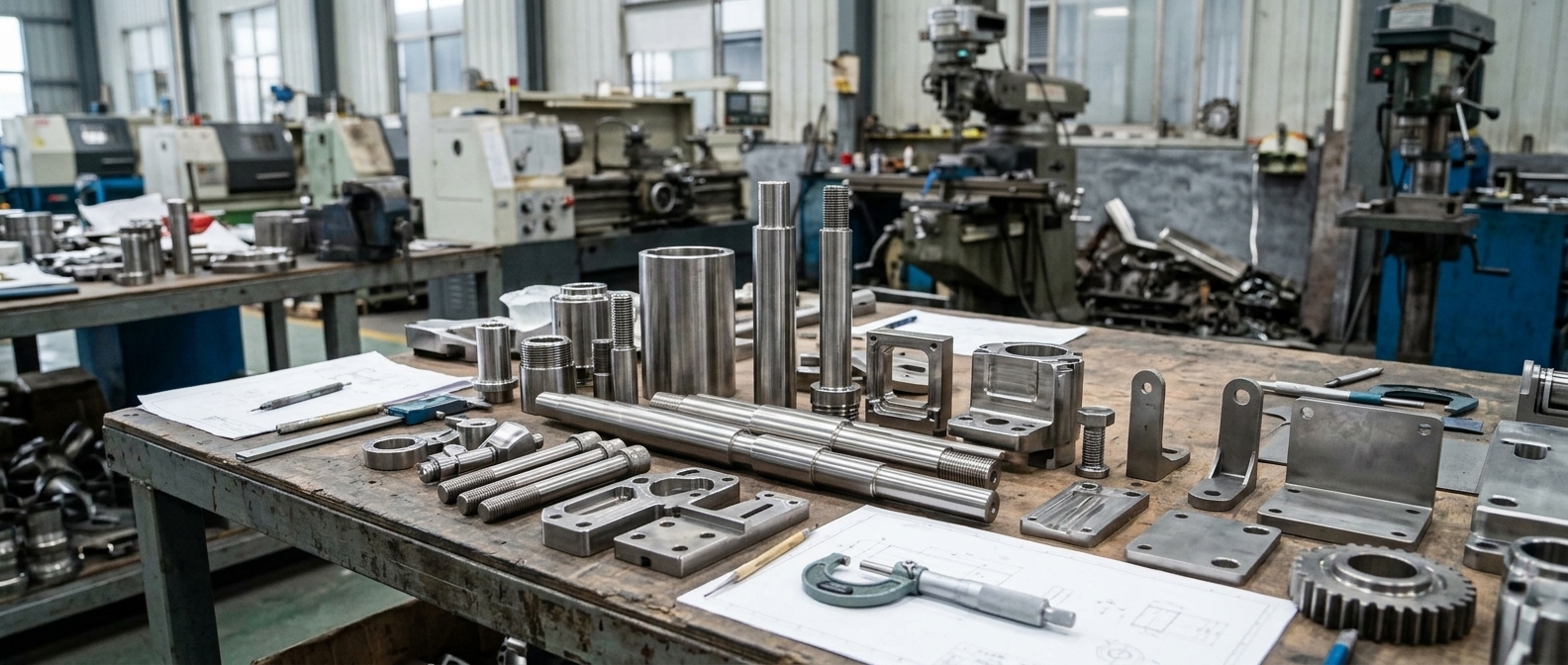
Parent custom parts category covering CNC, laser, welding and forming.
Browse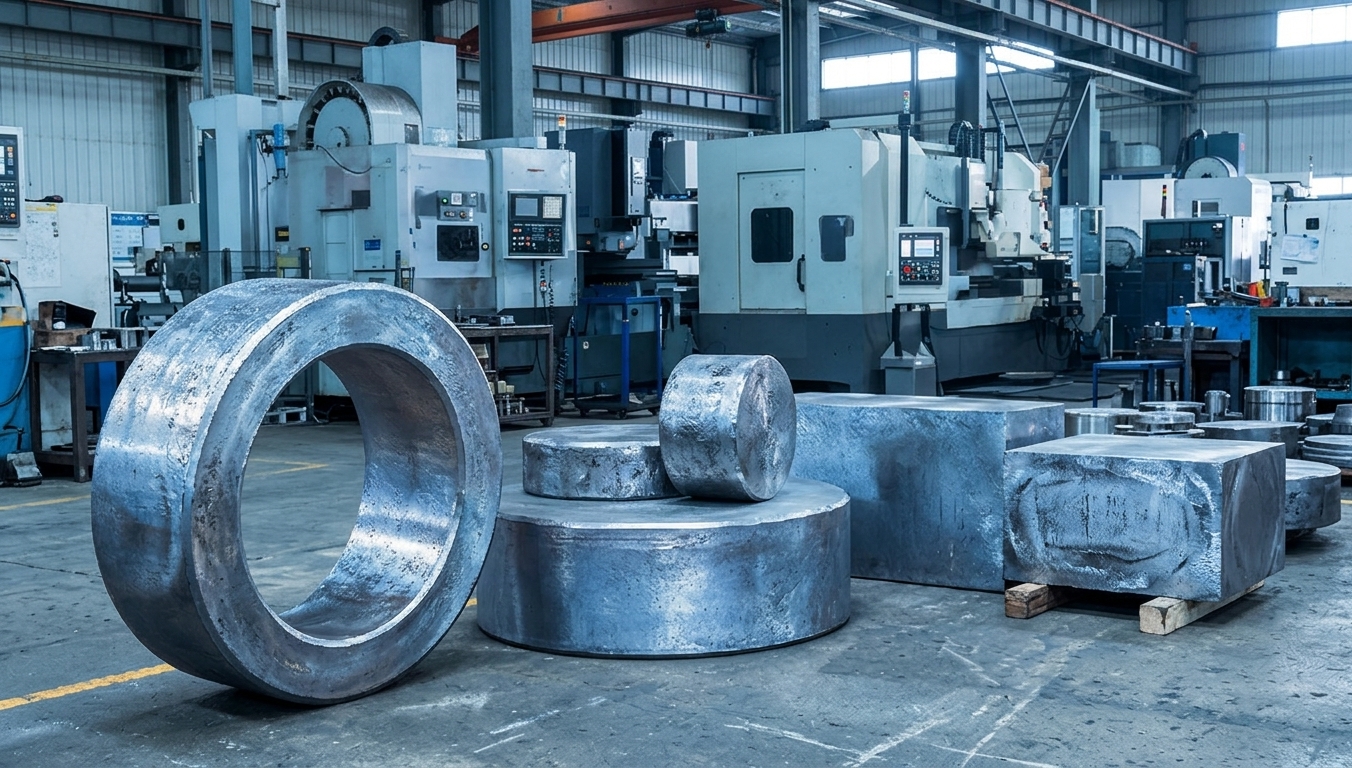
Forged starting stock option for near-net multi-axis machining.
Browse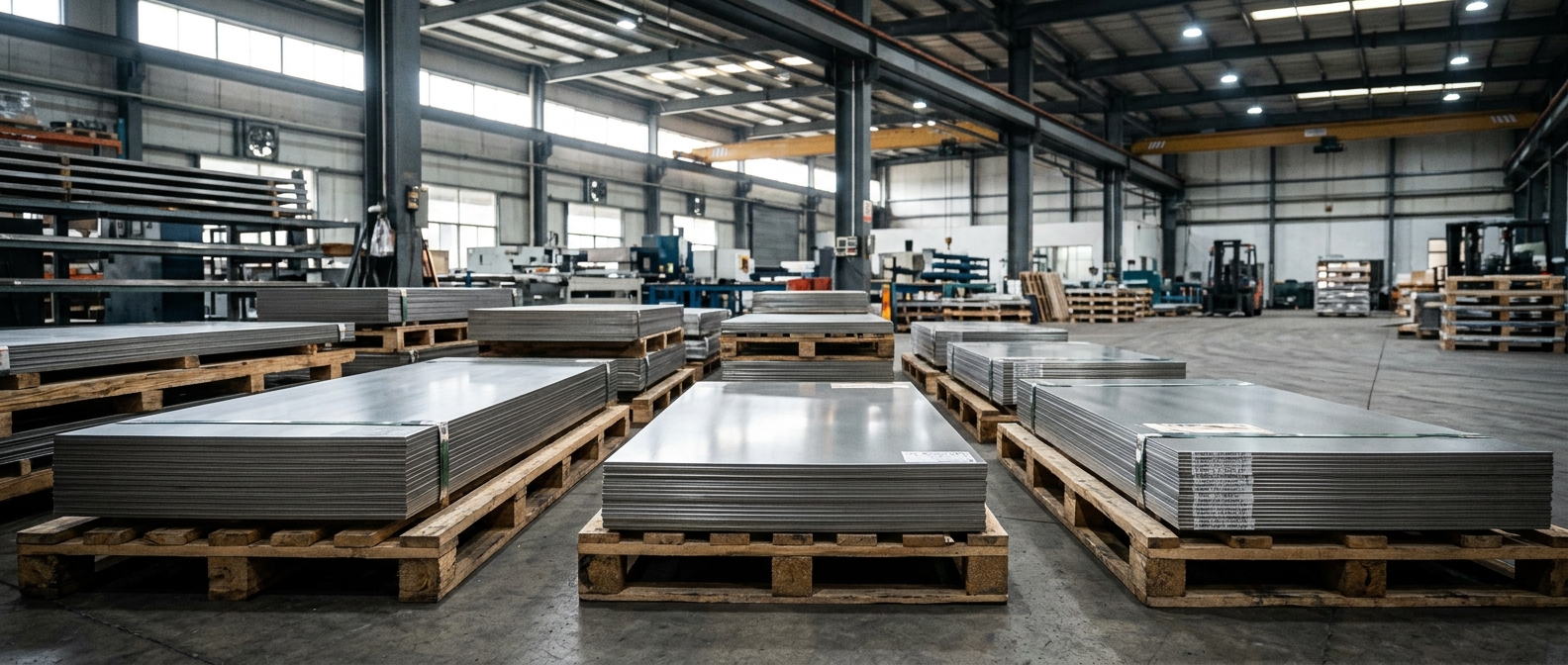
CNC-drilled precision tube sheet blanks — specialized milling application.
BrowseWelded and formed titanium process components — complementary fabricated part.
Browse