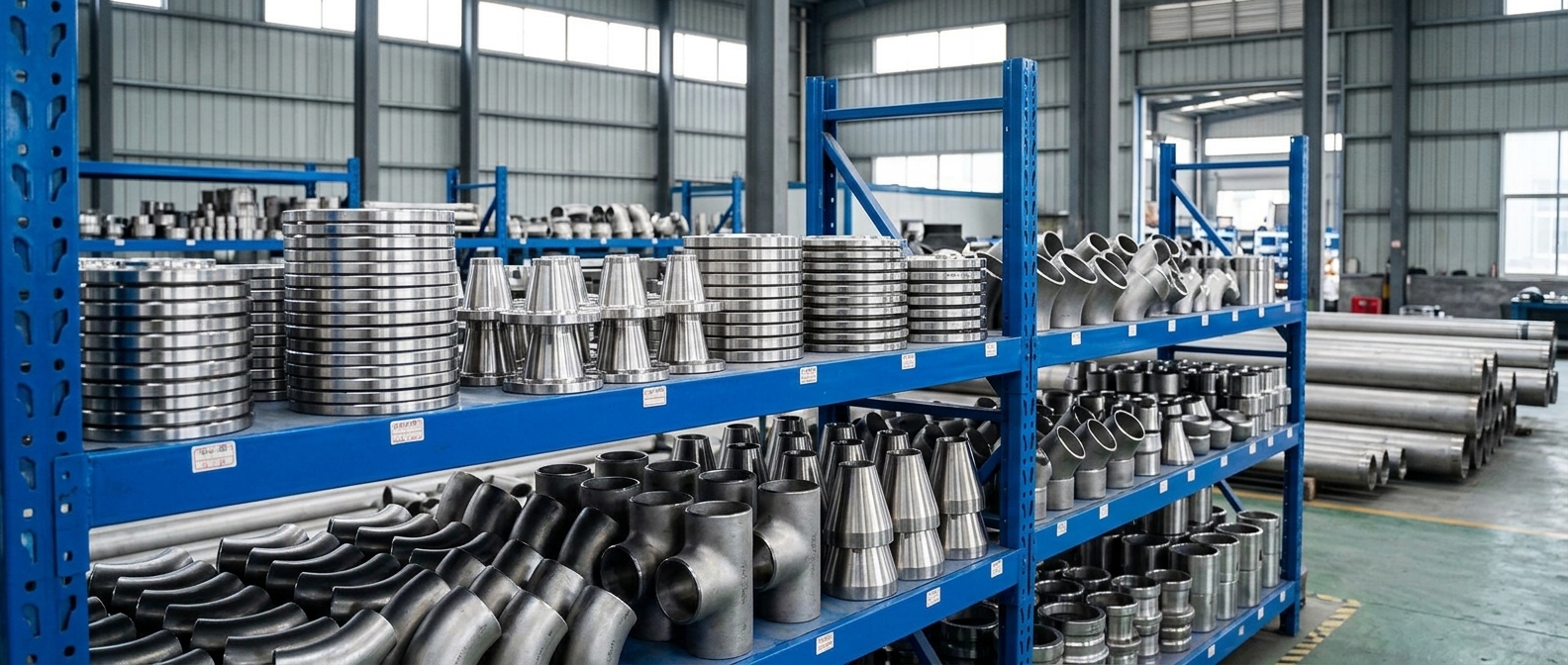
Titanium butt-weld and threaded end caps -- dished, flat and hemispherical -- to close the end of a pipe run permanently or for pressure testing.
Pipe caps close the end of a pipe run permanently or for pressure testing. Types include butt-weld caps (dished, hemispherical, flat), threaded caps, and socket weld caps. Each type has specific pressure ratings. Titanium pipe end caps differ from blind flanges in that caps attach directly to the pipe — not to a flange connection.
Caps are produced from plate or forged bar stock, then formed and machined to final dimensions. Supply is reviewed per inquiry against standard, type, NPS, schedule, grade and quantity.
Reviewed against your required standard, cap type and nominal pipe size.
Butt-weld caps commonly reference ASME B16.9 for dimensions. Threaded caps reference ASME B16.11 or ASME B1.20.1 for thread form.
Butt-weld caps (dished — most common, hemispherical — highest pressure rating, flat — lower pressure), threaded caps, and socket weld caps.
Industry Standard: NPS ½ through NPS 24 per ASME B16.9 for butt-weld caps.
Custom Manufacturing: Larger sizes and non-standard geometries evaluated per forming capacity.
Actual Supply Availability: Confirmed per inquiry against type, grade and wall thickness.
Permanent or temporary closure for the end of a titanium pipe run.
Caps used as end closures during hydrostatic or pneumatic testing of new piping systems.
Flat caps used to close U-bend return ends in certain heat exchanger configurations.
Dished caps are the strongest for butt-weld applications and are preferred for higher-pressure service. Flat caps are simpler but limited to lower pressures. Threaded caps are used for low-pressure threaded connections. Hemispherical caps provide the highest pressure rating.
No — caps are not flanged products. Butt-weld caps reference ASME B16.9 for dimensions. Threaded caps reference ASME B16.11 or ASME B1.20.1 for thread form. Caps attach directly to pipe — they do not have flange facings or bolt holes.
Pipe cap welds or threads directly to the pipe end — it's a permanent closure. Blind flange bolts onto a flange connection — it allows future disconnection for inspection or modification. Choose cap for permanent service; choose blind flange when disassembly may be needed.
Please specify the standard (e.g., ASME B16.9), cap type (dished, flat, hemispherical, threaded, socket weld), nominal pipe size (NPS), schedule, grade and quantity. For drawing-based or custom requirements, you may share your drawings with our sales team by email or WhatsApp after initial contact. Include material grade, dimensions, tolerances, quantity and drawing reference.
Send Inquiry