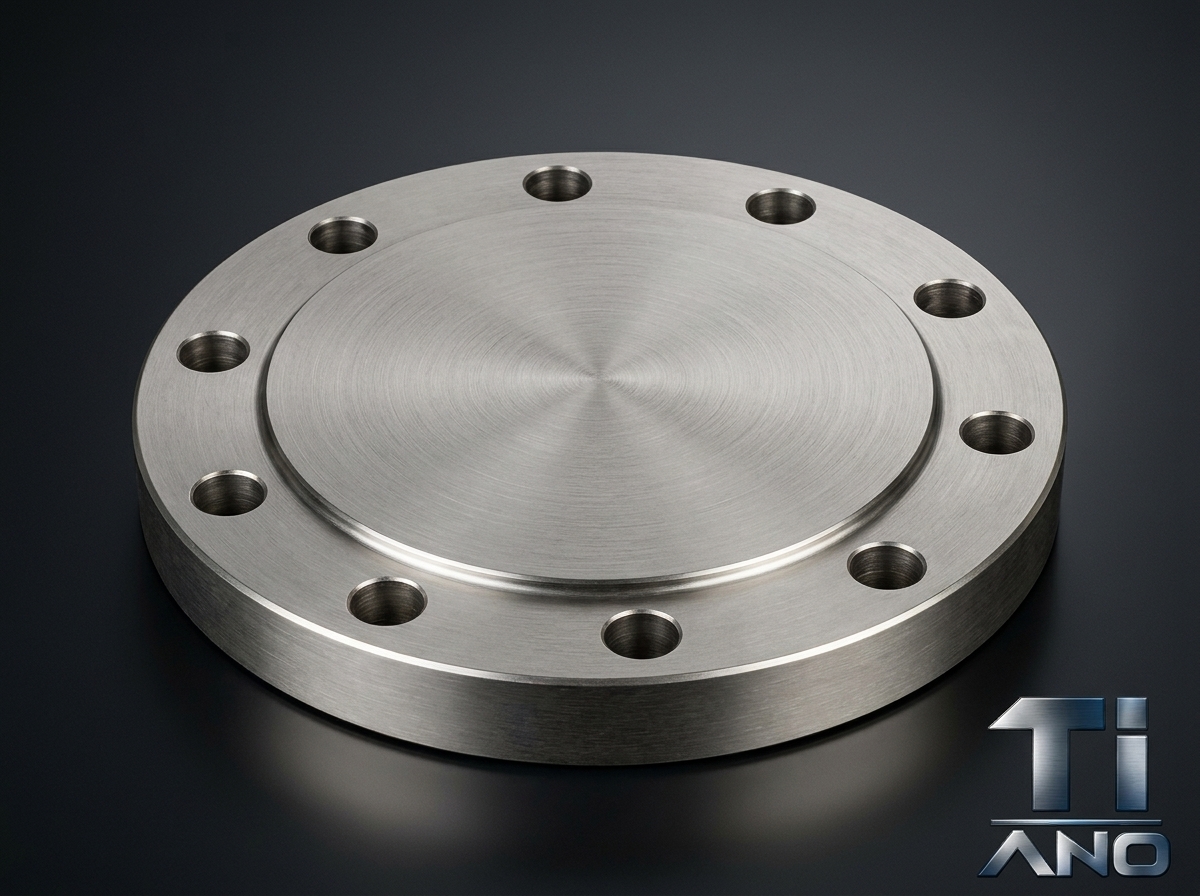
Blind flanges are solid circular discs used to blank off or seal the end of a pipeline. Rated to the same pressure class as mating flanges.
Blind (BL) flanges are solid circular discs without a bore. They are bolted onto the end of a pipe or fitting to seal it off completely. Blind flanges are used for isolating sections of piping for maintenance, pressure testing new lines, or as permanent end-of-line seals. They match the bolt pattern and pressure rating of the mating flange.
Blind flanges are produced from forged bar or plate stock, then CNC-machined to final dimensions. Supply is reviewed per inquiry against standard, pressure class, NPS, grade and facing.
Reviewed against your required standard, pressure class and nominal pipe size.
Commonly produced to ASME B16.5 for dimensions and pressure-temperature ratings. Also reviewed against EN 1092-1 and other regional standards per inquiry.
Class 150 through Class 2500 in ASME B16.5. Blind flange thickness is calculated per pressure class and NPS.
RF (Raised Face), FF (Flat Face), RTJ (Ring Type Joint). Must match mating flange facing.
Temporary or permanent blind ends for section isolation during maintenance.
Blind flanges used as end closures for hydrostatic and pneumatic testing of new piping.
Tube-side and shell-side end closures for titanium heat exchangers.
A blind flange bolts onto a flange connection, while a pipe cap (butt-weld or threaded) welds or threads directly onto the pipe end. Blind flanges allow easier future disconnection than welded caps.
Blind flanges are most commonly supplied to ASME B16.5 for dimensions and pressure-temperature ratings. Pressure classes range from Class 150 to Class 2500. The blind flange thickness is calculated per pressure class and nominal pipe size (NPS). Regional standards such as EN 1092-1 and other standards are reviewed per inquiry.
Common facing options are RF (Raised Face), FF (Flat Face), and RTJ (Ring Type Joint). The facing must match the mating flange. Blind flanges are not available in threaded or socket-weld configurations in ASME B16.5 — these connections use threaded or socket-weld flanges with matching pipe caps.
Please specify the standard (e.g., ASME B16.5), pressure class (e.g., Class 300), nominal pipe size (NPS), grade, facing and quantity. We will confirm availability and supply conditions. For drawing-based or custom requirements, you may share your drawings with our sales team by email or WhatsApp after initial contact. Include material grade, dimensions, tolerances, quantity and drawing reference.
Send Inquiry