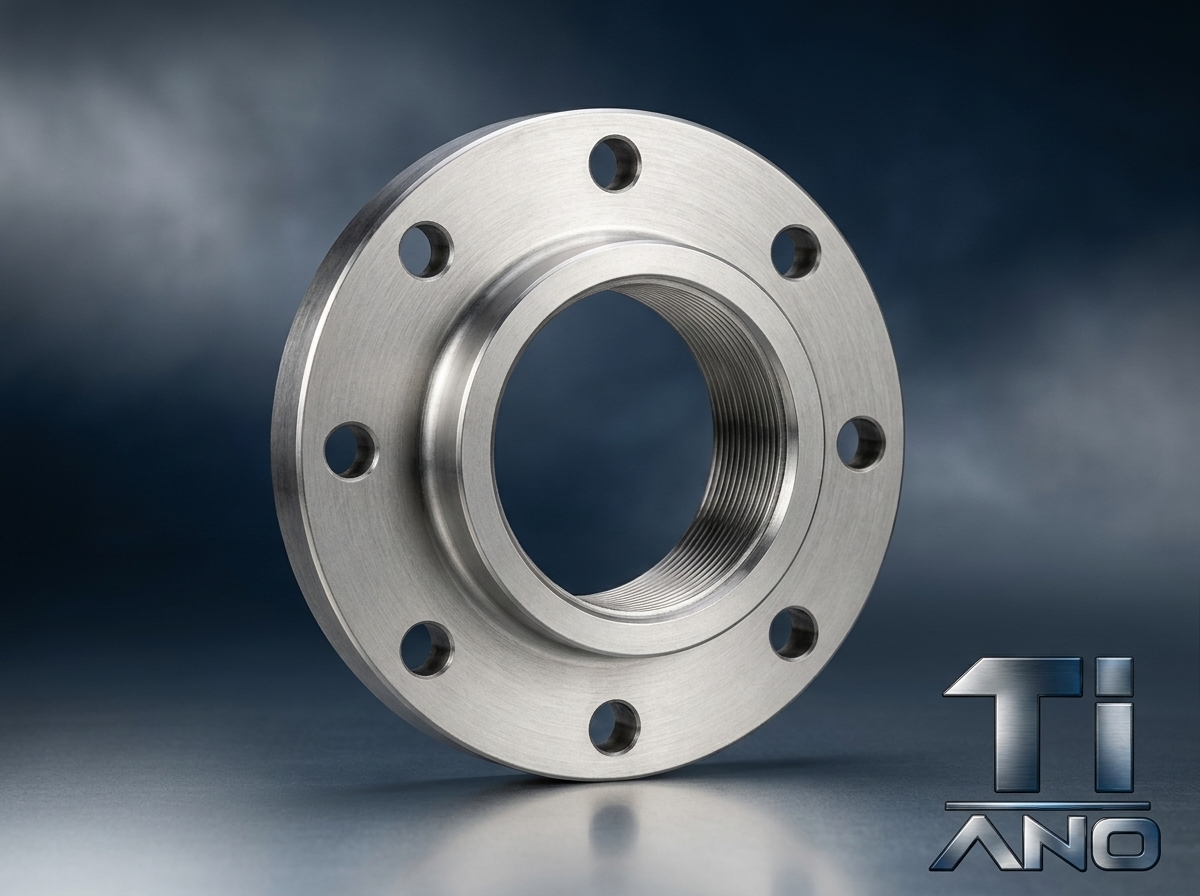
Threaded flanges have a threaded bore that screws onto threaded pipe -- for low-pressure, non-critical services where welding is not desired.
Threaded (TH) flanges have an internally threaded bore that screws directly onto externally threaded pipe ends. They require no welding, making assembly and disassembly quick. Threaded flanges are unsuitable for applications subject to bending stress or thermal cycling. They are most commonly selected for low-pressure instrumentation and utility lines where welding is impractical or disassembly is frequent.
Thread form (NPT, BSPT, or other) must be confirmed per inquiry along with standard, pressure class, NPS, grade and facing.
Reviewed against your required standard, pressure class, thread form and nominal pipe size.
ASME B16.5 is the primary standard for threaded flange dimensions and pressure-temperature ratings. Thread forms per ASME B1.20.1 (NPT) or ISO 7 (BSPT). Alternative regional standards reviewed per inquiry.
Class 150 and Class 300 are the most common threaded flange ratings. Higher pressure classes evaluated per request.
Industry Standard: NPS ½ through NPS 12 per ASME B16.5.
Custom Manufacturing: Larger sizes evaluated per forging and threading capacity.
Actual Supply Availability: Confirmed per inquiry against grade, pressure class and thread form.
Low-pressure connections for instrumentation and small-bore auxiliary lines.
Compressed air and low-pressure gas distribution where welding is impractical.
Low-pressure utility connections that benefit from rapid assembly and disassembly.
NPT (National Pipe Taper, ASME B1.20.1) is the most common for North American piping systems. BSPT (British Standard Pipe Taper, ISO 7) is common in Europe and Asia. Thread form must match the mating pipe.
Threaded flanges require no welding but are not suitable for high-temperature cycling or bending stress. They are typically available in Class 150 and Class 300 only. For high-pressure or critical service, consider SO or WN flanges.
Yes — threaded flanges work with threaded titanium pipe ends. Confirm the thread form (NPT or BSPT) matches your pipe before ordering. Thread engagement and sealing are critical — use a suitable thread sealant for your service environment.
Please specify the standard (e.g., ASME B16.5), pressure class, nominal pipe size (NPS), thread form (NPT / BSPT), grade, facing and quantity. We will confirm availability and supply conditions. For drawing-based or custom requirements, you may share your drawings with our sales team by email or WhatsApp after initial contact. Include material grade, dimensions, tolerances, quantity and drawing reference.
Send Inquiry