Titanium racks and hangers for electroplating, anodizing and surface treatment process lines — custom designed to support and position parts during batch processing.
Titanium racks and hangers are process line components that support, position and retain individual parts during electroplating, anodizing, pickling and other surface treatment operations. Unlike baskets which hold loose bulk parts, racks and hangers support parts by attachment points — using clips, hooks, bolts or spring contacts — for more consistent coverage uniformity and process control.
Feinuotai coordinates titanium rack and hanger fabrication through qualified partner workshops. Design is matched to the specific part geometry, process sequence and process line layout. Attachment hardware, rack spacing and electrical contact requirements are all customized per application.
Custom designed based on part geometry, process line and handling requirement.
Titanium rack structure is designed around three primary inputs — the part's attachment features (holes, bosses, edges), the process line's bath dimensions and automation level, and the processing sequence (which operations the rack will cycle through). Common rack structures include horizontal multi-position bars, vertical pole-and-hook configurations and grid or frame assemblies.
Parallel horizontal titanium bars with attachment points along each bar — suited to parts with multiple mounting holes or features, enabling high part density per rack.
Central vertical titanium pole with radial hangers — suited to parts hanging from single points. Common for anodizing and decorative plating lines.
Frame and cross-member construction — for heavy parts or parts requiring precise positioning during multi-process sequences.
Customized to match part attachment features and electrical contact requirement.
Hanger design is one of the most critical elements of rack design — the hanger must securely hold the part, provide consistent electrical contact where required, and allow full process fluid access to part surfaces. Feinuotai coordinates multiple hanger types:
Spring-loaded titanium or copper-coated contact clips — provide consistent electrical contact and reliable part retention. Coated contacts used for plating applications requiring good conductivity.
Bent titanium wire hooks — simple and economic for parts with hanging holes or loops. Hook geometry matched to part hole diameter and required clearance.
Threaded titanium rod and bolt attachments — for parts with threaded mounting holes. Enables secure retention and uniform positioning.
Rack structural design considers weight, loading density and process environment.
Rack structural members — bars, poles, frames and hangers — are designed based on the expected total rack loading, number of positions per rack and worst-case process temperature. For example, racks carrying many heavy automotive parts require thicker section titanium bars compared to light-duty decorative plating racks. Feinuotai does not publish generic weight ratings — rack load capacity is confirmed per custom design against your specific part and process line requirements.
Rack main structure is typically Grade 1 or Grade 2 CP titanium for corrosion resistance. Contact tips and clips may incorporate copper or copper-plated sections where electrical conductivity is critical — titanium alone has higher contact resistance than copper. Surface treatments including passivation, electropolishing and MMO coating are coordinated depending on the process environment and rack function.
Racks for barrel plating and rack plating lines — nickel, chrome, gold, silver and precious metal plating.
Parts racks for aluminum hard coat anodizing, decorative anodizing and titanium anodizing process lines.
Support jigs and fixtures for PVD coating, thermal spray coating and electrophoretic coating (e-coat) processes.
Racks for chemical treatment, pickling, passivation and cleaning process lines — corrosion-resistant titanium construction.
Feinuotai coordinates titanium rack and hanger fabrication through qualified partner workshops. The typical process begins with part and process line analysis, followed by rack design and drawing approval, titanium bar/wire procurement, TIG welding assembly, attachment hardware integration and dimensional verification. We manage the full process from specification review through delivery.
Dimensional verification, contact resistance testing and corrosion resistance documentation can be coordinated depending on rack application and customer quality requirements.
Racks and hangers support individual parts by attachment (better for large, delicate or high-value parts, and parts requiring consistent coverage). Baskets hold loose bulk small parts. Choose based on your part type and process requirement.
Yes — titanium contact tips, copper-coated contact pins (for improved electrical conductivity), spring clips and custom attachment hardware can all be incorporated into rack designs.
Lead time depends on design complexity, part count and material availability. Simple standard rack designs may be coordinated in 2–4 weeks; fully custom rack systems matched to new process lines require additional engineering time.
Provide part drawings or descriptions, process type (electroplating, anodizing, coating), rack positioning (horizontal/vertical), number of positions per rack and process bath dimensions.
Send part drawings or describe your parts, process line type (manual or automated), number of positions per rack and process environment. Include any existing rack design references or special requirements.
Helpful details: Part Description/Drawing, Process Type, Positions per Rack, Rack Dimensions, Quantity
Send InquiryParent category — racks and hangers are custom fabricated process components.
BrowseComplementary bulk parts carrier — holds loose small parts instead of individually supported parts.
Browse
Related electrochemistry product category for plating and electrochemical processes.
Browse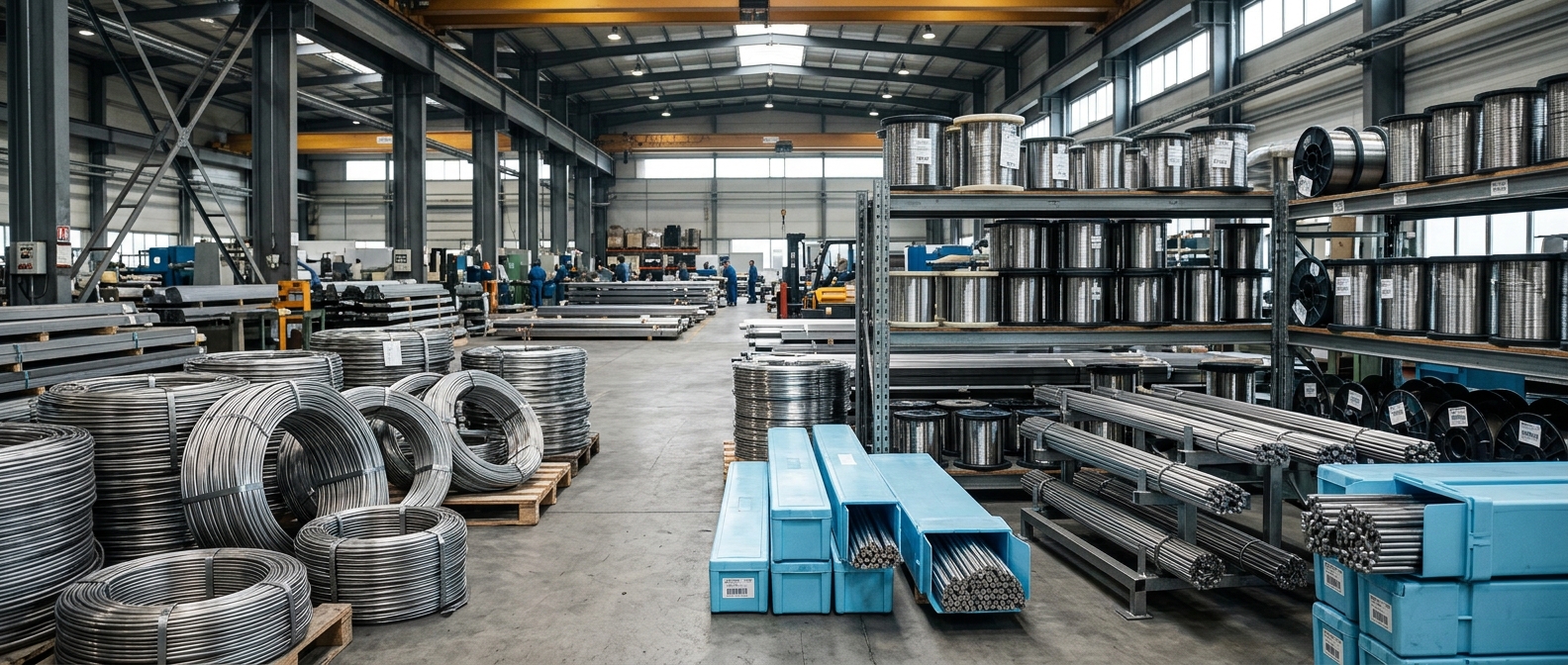
Raw material — rack hangers and hooks can be fabricated from titanium wire stock.
Browse