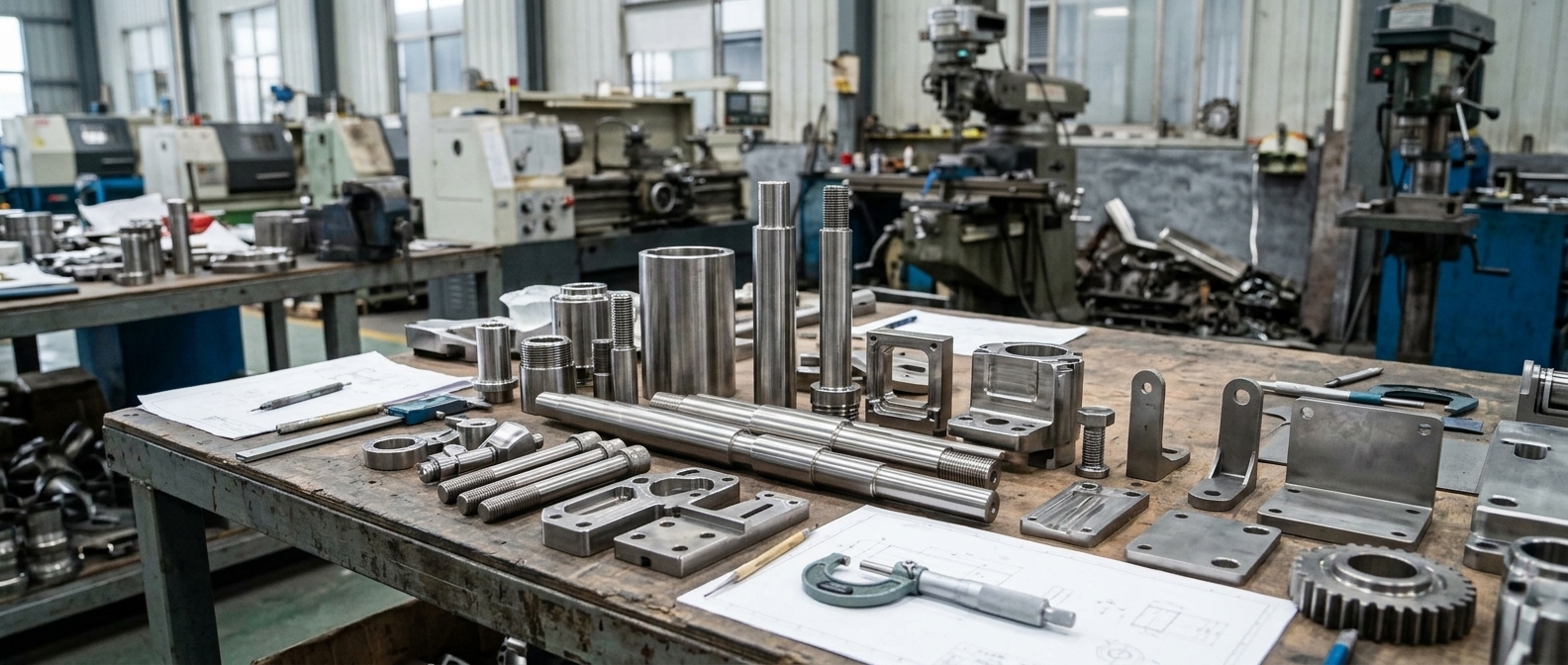
Copper core with titanium cladding — titanium-clad copper bar, busbar and profile products combining copper's electrical conductivity with titanium's corrosion resistance.
Important Distinction: Titanium-clad copper products are a different product form from titanium-copper composite plates (explosive-bonded flat plate stock). Titanium-clad copper products are bar, rod, busbar or profile products where a thin layer of titanium is cladded AROUND a solid copper core — like a shell around a rod. The copper core provides high electrical conductivity, while the titanium cladding provides corrosion resistance to the outer surface.
Feinuotai coordinates titanium-clad copper production — cladding thickness, copper core grade, cross-sectional shape and length are all specified per electrical and environmental requirements.
Titanium-clad copper products consist of two functional components — a solid copper core for electrical conductivity, and a titanium cladding layer on the outer surface for corrosion resistance. The bond between the copper core and titanium cladding must maintain both electrical contact and structural integrity throughout the product's service life.
Solid copper core providing the product's primary electrical conductivity. Copper core grade is selected based on conductivity and mechanical property requirements — typically high-conductivity copper or copper alloy. Copper core grade to be confirmed against supplier stock specification.
Outer titanium layer — typically Grade 1 or Grade 2 CP titanium for corrosion resistance. Cladding thickness is specified against the corrosion environment and product application. Cladding is applied around the entire copper core outer surface.
Cross-sectional shape and dimensions confirmed per customer requirement.
Titanium-clad copper products are supplied in custom cross-sectional shapes and lengths. Common geometries include:
Circular cross-section titanium-clad copper bar — used in electrode holders and current-carrying components with rotational or cylindrical geometry.
Rectangular cross-section titanium-clad copper flat bar — common for busbar applications requiring high current capacity with corrosion resistance.
Custom busbar cross-sections — including I-beam, hollow and multi-leg profiles — matched to specific busbar system requirements.
The bonding process between the titanium cladding and copper core is selected based on product geometry, cladding thickness and application requirement. Common routes include roll cladding (where the titanium layer is rolled onto the copper core under pressure) and diffusion bonding (where the titanium and copper are held at elevated temperature and pressure to form a metallurgical bond). Specific bonding route is confirmed against production partner capability and product specification.
Bond integrity is verified through destructive and non-destructive testing depending on application criticality — typical tests include peel or shear testing for bond strength and ultrasonic inspection for bond uniformity.
All dimensions confirmed per customer drawing or specification.
High-current busbars where the busbar must both carry significant electrical current (via copper core) and resist corrosion from process environments (via titanium cladding).
Busbars and connectors for electrochemical processes including electrowinning, electroplating and battery systems — connects to coated titanium anodes in corrosive cell environments.
Electrode holders and current-carrying components for welding and plasma processing equipment requiring both conductivity and corrosion resistance.
Corrosion-resistant busbars and connectors for desalination, marine power and coastal power generation equipment exposed to saltwater environments.
Feinuotai coordinates titanium-clad copper fabrication through qualified partners. Beyond supplying straight bar lengths, we can also coordinate cutting to custom lengths, drilling, bending to simple shapes, and end preparation (facing, chamfering, threaded ends). Please specify your required secondary operations when submitting an inquiry.
Bond integrity testing (peel strength, shear strength or ultrasonic inspection), cladding thickness measurement and electrical conductivity verification documentation can be coordinated depending on application criticality and customer quality requirements.
Titanium-copper composite plates are FLAT PLATE stock produced by explosive bonding — titanium and copper sheets bonded face-to-face as flat plate for subsequent rolling or forming. Titanium-clad copper products are BAR or BUSBAR — titanium is cladded AROUND the copper core (shell around rod). Different product form, different bonding route, different end-use.
Yes — round bars, flat bars, rectangular busbars and other shapes can be supplied. Specify cross-section dimensions and cladding thickness at inquiry. Busbar profile shapes are confirmed against production feasibility.
Cladding thickness is specified against the corrosion resistance requirement and the copper core dimensions. Typical range reference for busbar applications is approximately 0.2 mm through 1 mm. Final cladding thickness and bond method are confirmed per order.
Copper core grade selection depends on conductivity and mechanical property requirements. Specific grades are confirmed against supplier stock specification and product application. Please specify your conductivity or copper grade requirement at inquiry.
Tell us cross-section shape and dimensions, copper core grade or conductivity requirement, titanium cladding thickness, length and quantity. Include your end-use application for more accurate grade and process recommendations.
Helpful details: Cross-Section Shape, Copper Core Dimensions, Ti Cladding Thickness, Length, Quantity, Application
Send InquiryParent category — titanium-clad copper is a specialized custom fabricated component.
Browse
Related but DIFFERENT product — flat Ti-Cu plate from explosive bonding.
Browse
Ti-clad copper busbars commonly connect to coated titanium anodes in electrochemical processes.
Browse
Pure titanium bar alternative — for applications where copper core is not required.
Browse