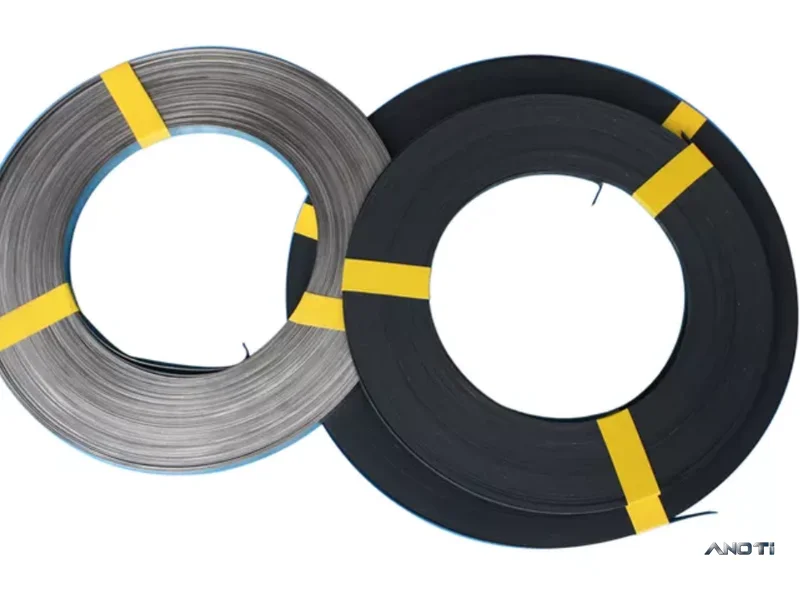
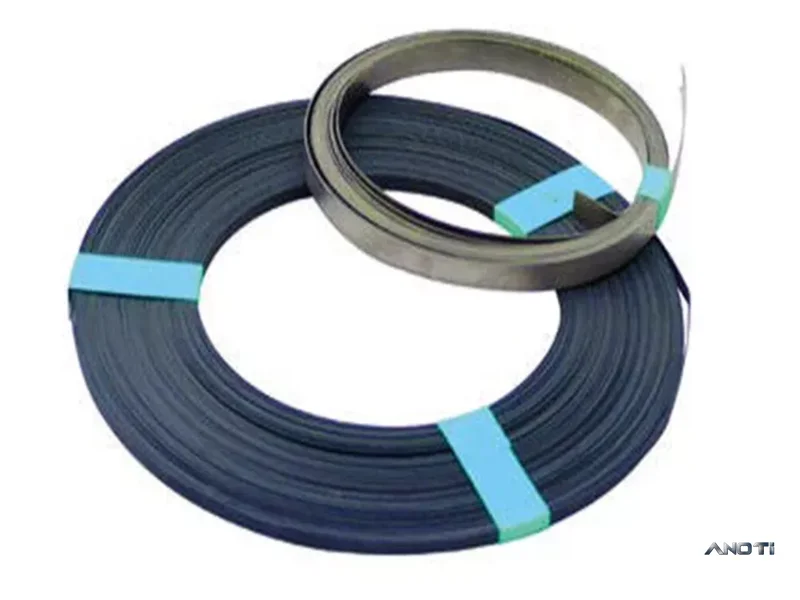
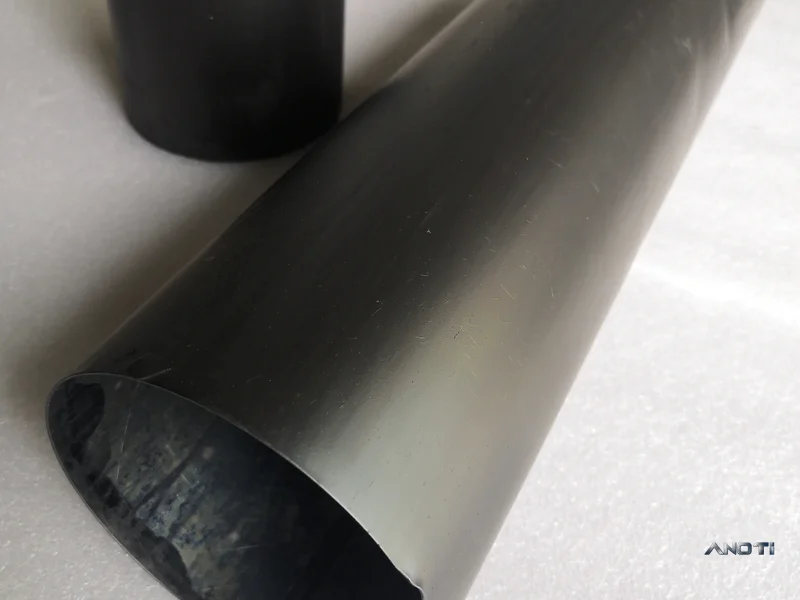
Thermal decomposition IrO₂-based mixed metal oxide coating on Grade 1 titanium substrates. Optimized for oxygen evolution reactions in electrolysis, electrowinning and water treatment.
Ir-based MMO coatings catalyze the oxygen evolution reaction (OER) — the primary reaction in water splitting, metal electrowinning, organic electrosynthesis and electrochemical water treatment.
Both Ru-based and Ir-based MMO coatings are manufactured by ANO in-house. The distinction lies in their catalytic target:
Chlorine evolution: Lower overpotential for Cl₂ than Ir-based. Optimized for 2Cl⁻ → Cl₂ ↑. Best for salt/NaCl electrolytes.
Oxygen evolution: Stable and selective for OER across a wider pH range (acidic, neutral, alkaline). Does not catalyze Cl₂ in low-Cl⁻ electrolytes.
ANO applies Ir-based MMO coatings using the thermal decomposition process — the industry-standard method for MMO-coated titanium anodes. Our coating line operates in-house.
Ir-based coating loading: 4–8 g/m² (thermal decomposition). Lower loading than Ru-based MMO due to Ir's higher catalytic efficiency per gram.
4–8 g/m² thermal decomposition (industry reference value)
Up to 2 kA/m² oxygen evolution (continuous reference value)
Up to 80°C continuous service
pH 0–14 stable — unlike Ru-based MMO which degrades in alkaline service above ~8
>20,000 h at 0.5 A/cm² in 1 M H₂SO₄ (industry reference value)
Grade 1 CP titanium (ASTM B265 / B338) — ANO manufactures in-house
All values: reference values, not ANO proprietary test data. ANO provides proprietary coating verification and accelerated life test documentation per order. Specific performance depends on operating conditions.
| Application | Ir-Based Suitability | Note |
|---|---|---|
| Metal electrowinning (acidic sulfate) | ✅ Recommended | Industry standard replacing PbO₂ |
| Organic electrosynthesis | ✅ Recommended | High-potential oxidation verified |
| Water treatment (3–5V) | ✅ Recommended | Moderate-voltage EAOP |
| AWE alkaline water electrolysis | ⚠️ Conditional | Possible but Ru-based more economical |
| PEM electrolyzer (>10 kA/m²) | ❌ Not recommended | Needs Ir black/nano powder, not thermal decomposition coating |
| High-voltage wastewater (>5V) | ❌ Not recommended | Consider β-PbO₂ (external coordination) |
Ir-based MMO coating composition (EDS / XRD), coating thickness (SEM or gravimetric), accelerated life testing and electrochemical polarization characterization — ANO proprietary documentation provided per order.